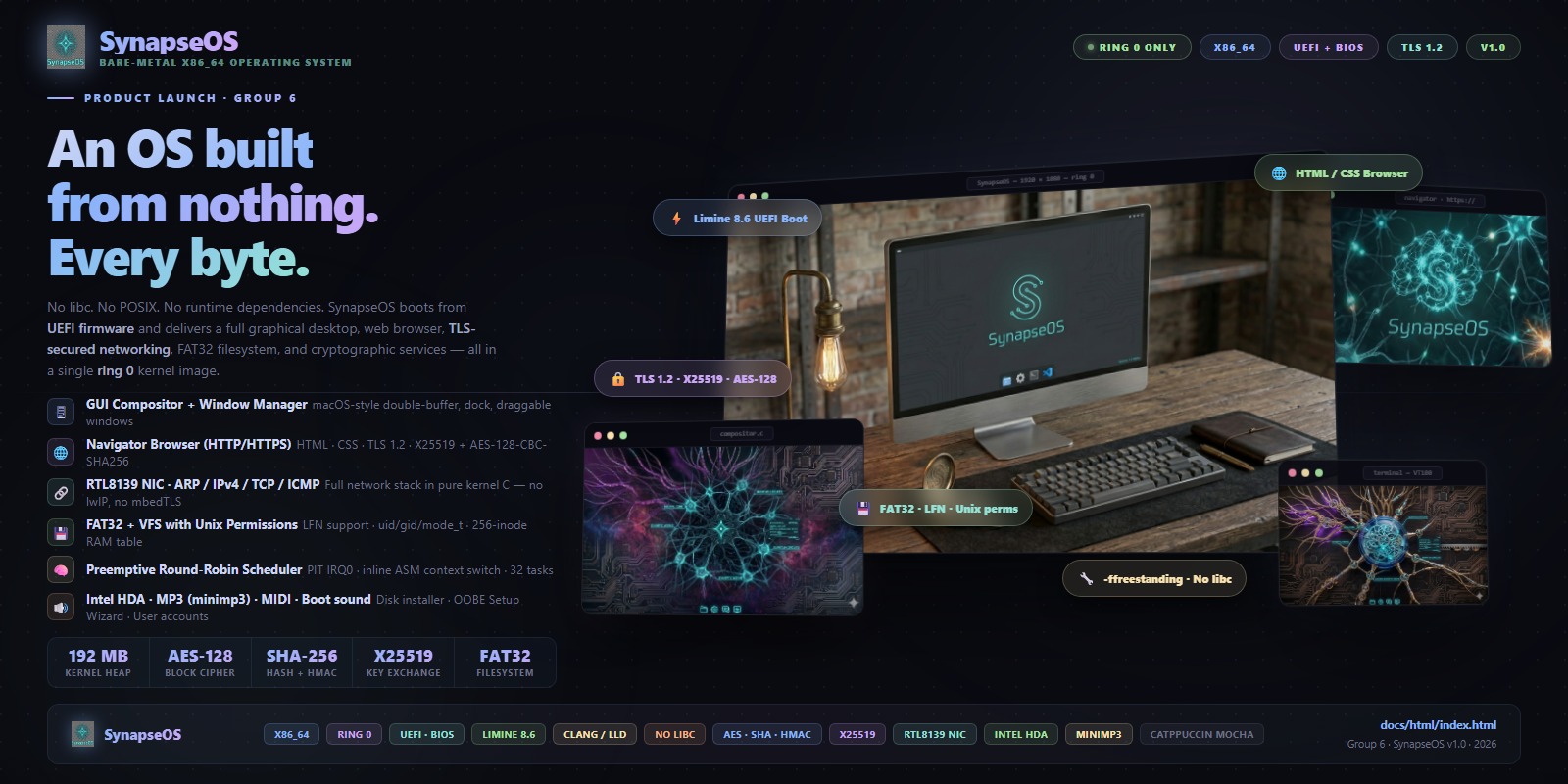
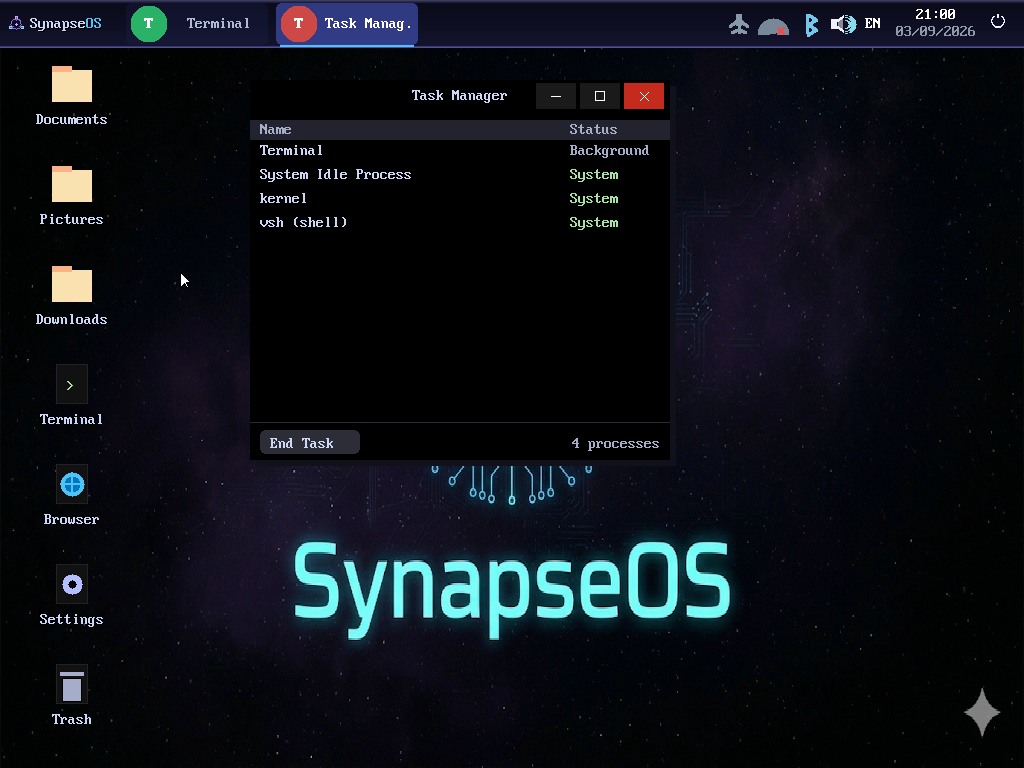
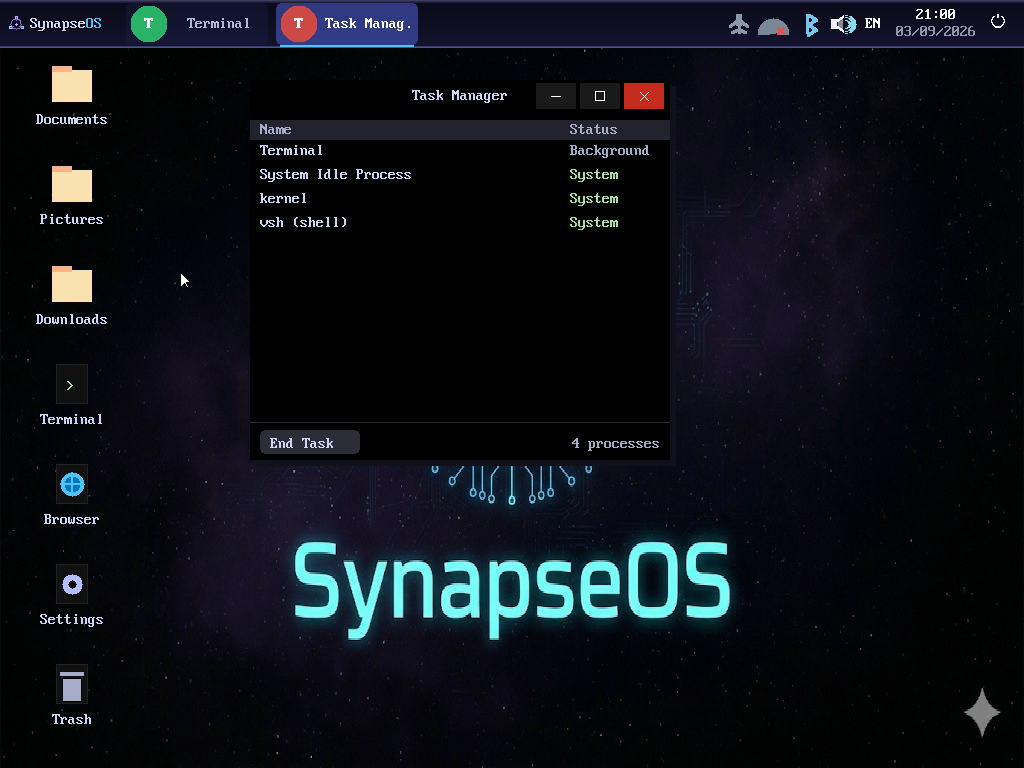
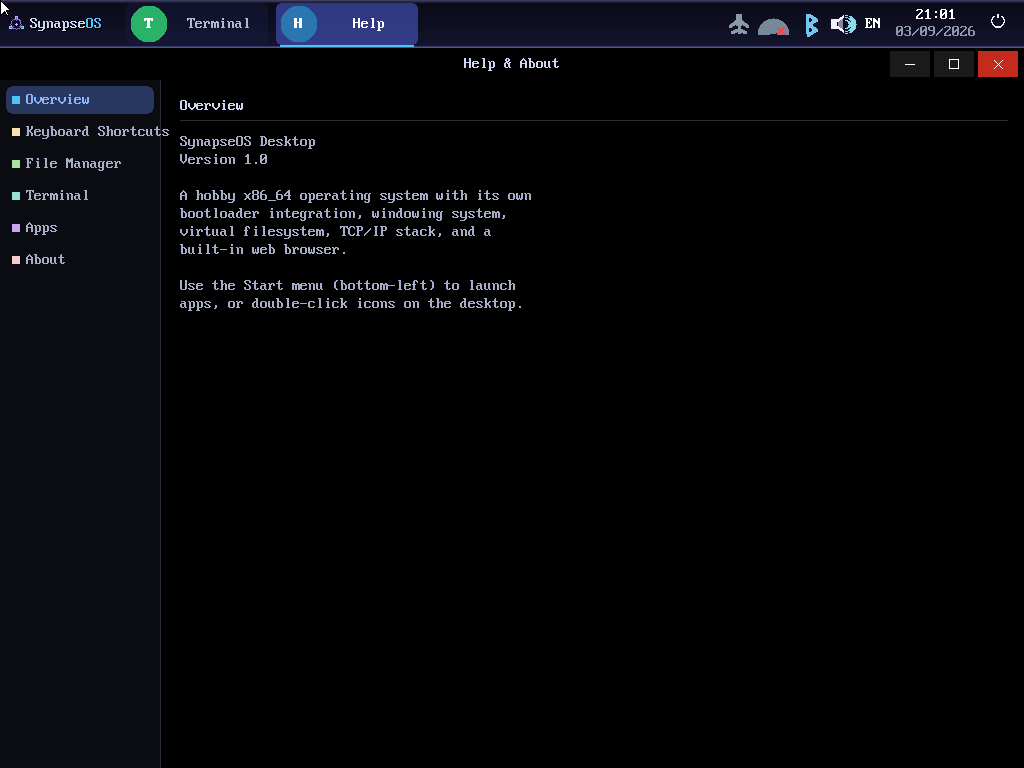
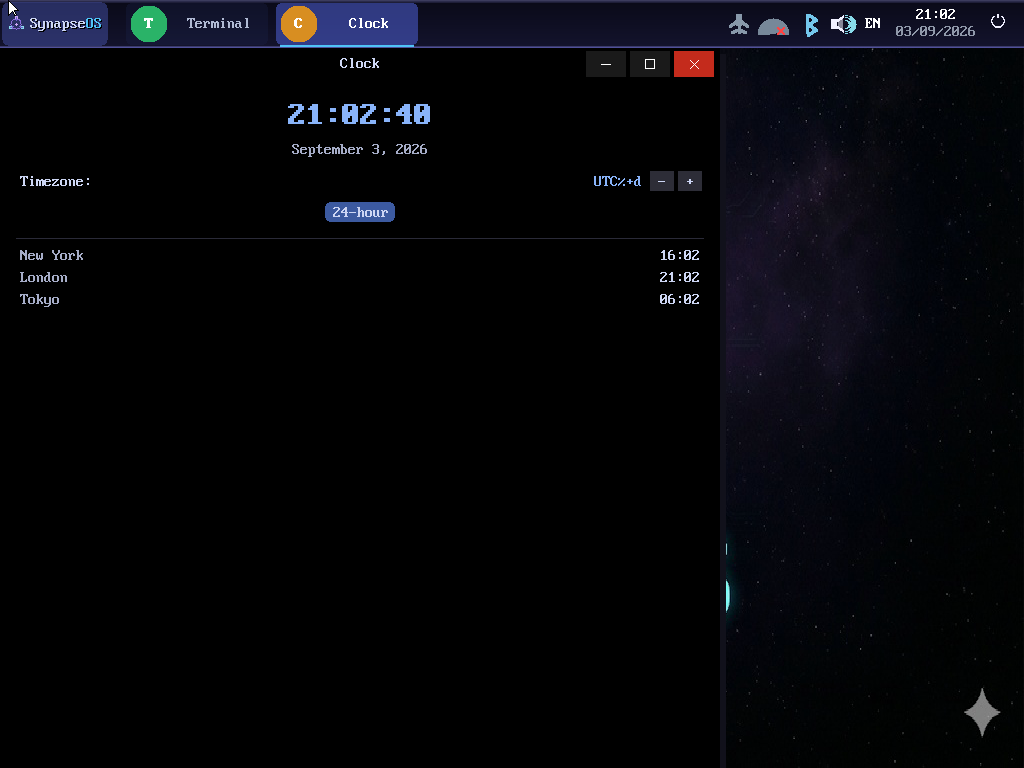
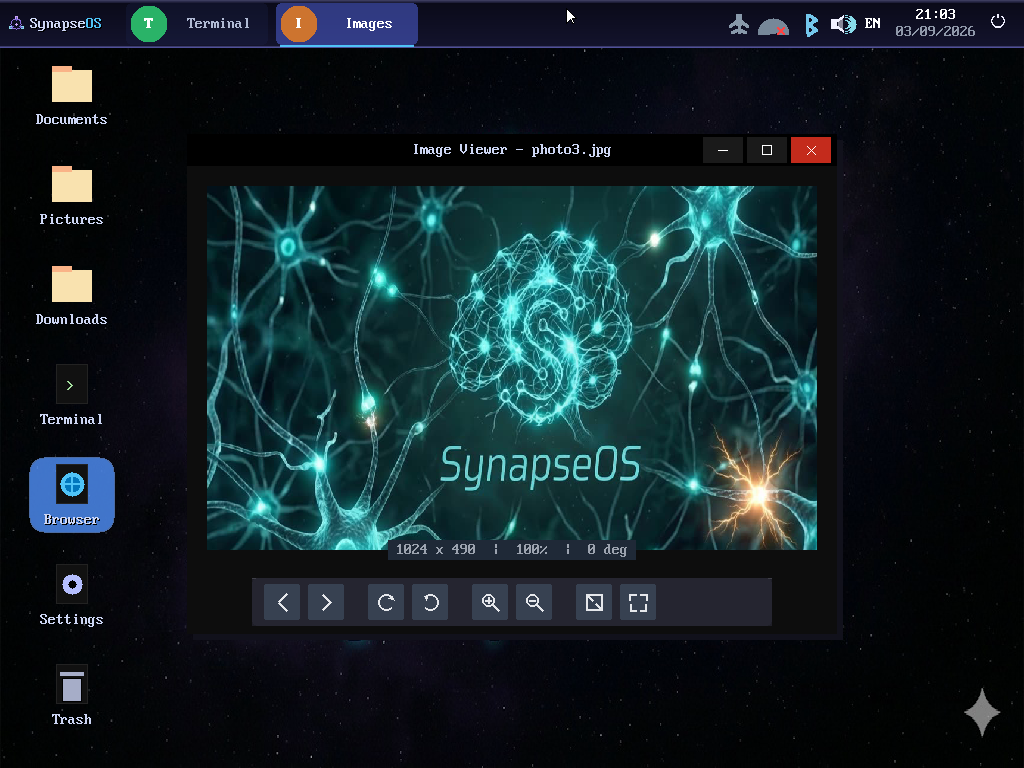
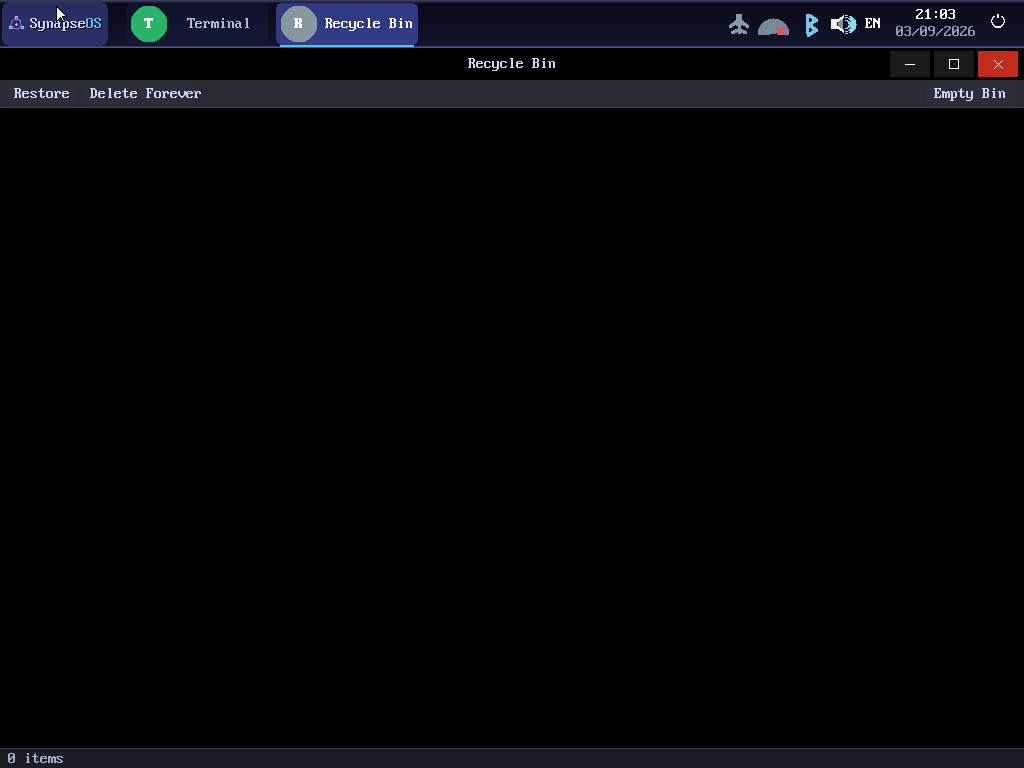
SynapseOS is a from-scratch, ring-0 operating system built for developers, students, and OS enthusiasts who want to see exactly how a modern computer boots and runs —with nothing hidden underneath.
WHAT YOU GET
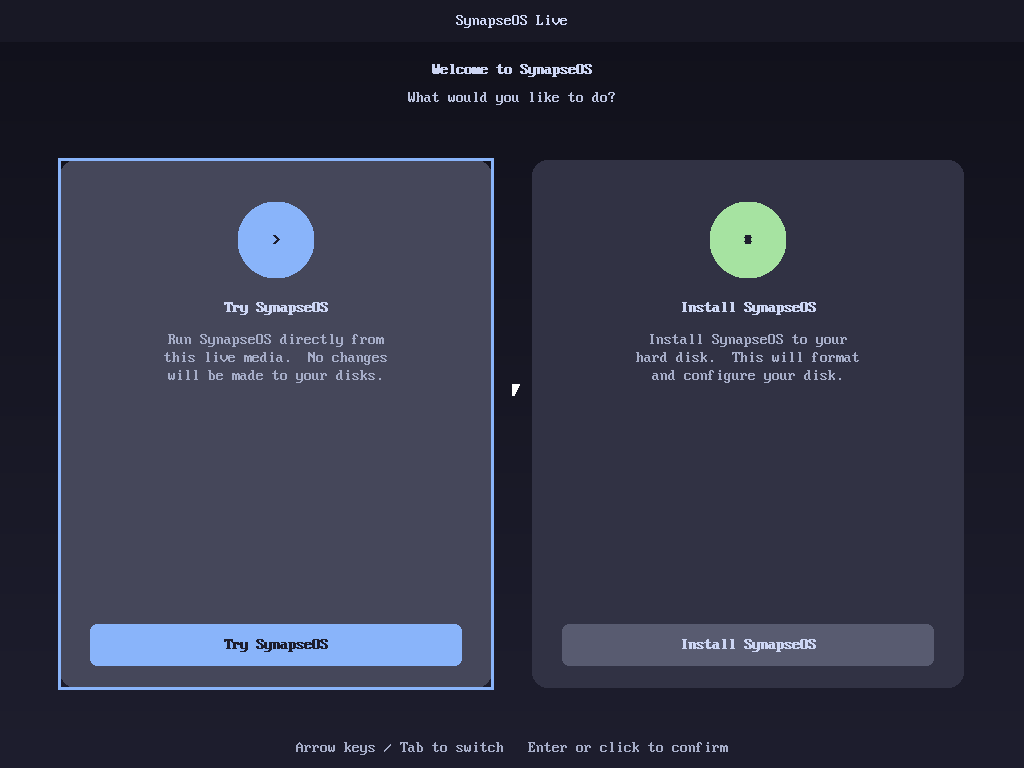
• A bootable ISO image (UEFI + legacy BIOS compatible) — write it to USB and boot on real hardware or run instantly in QEMU/VirtualBox.
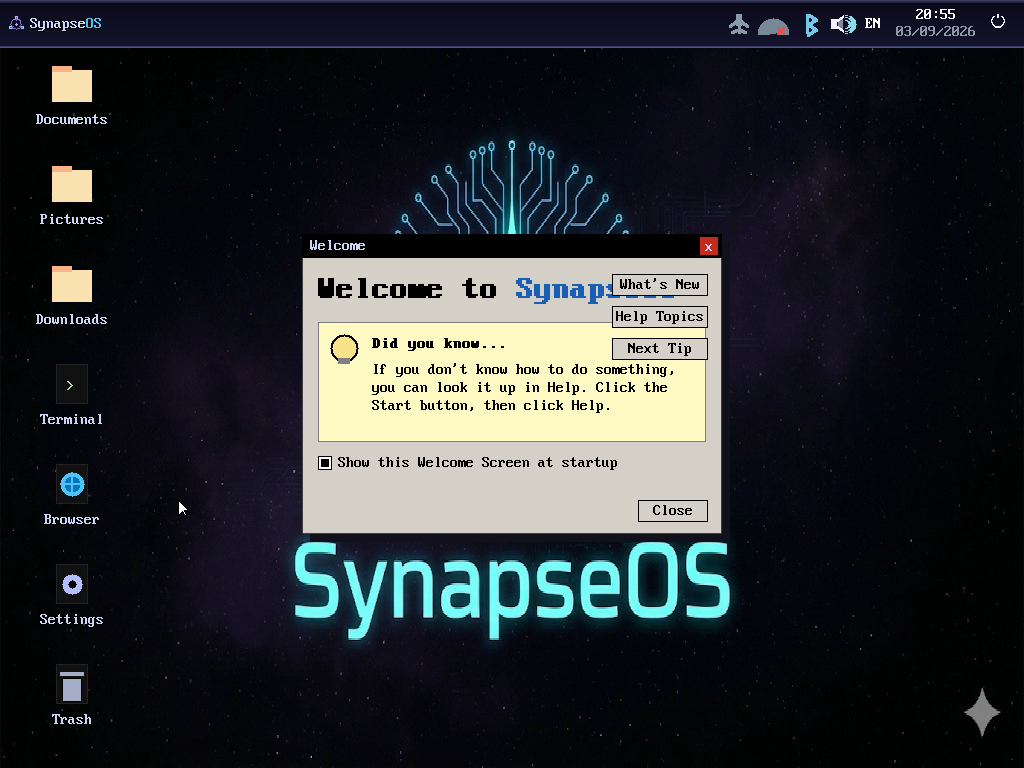
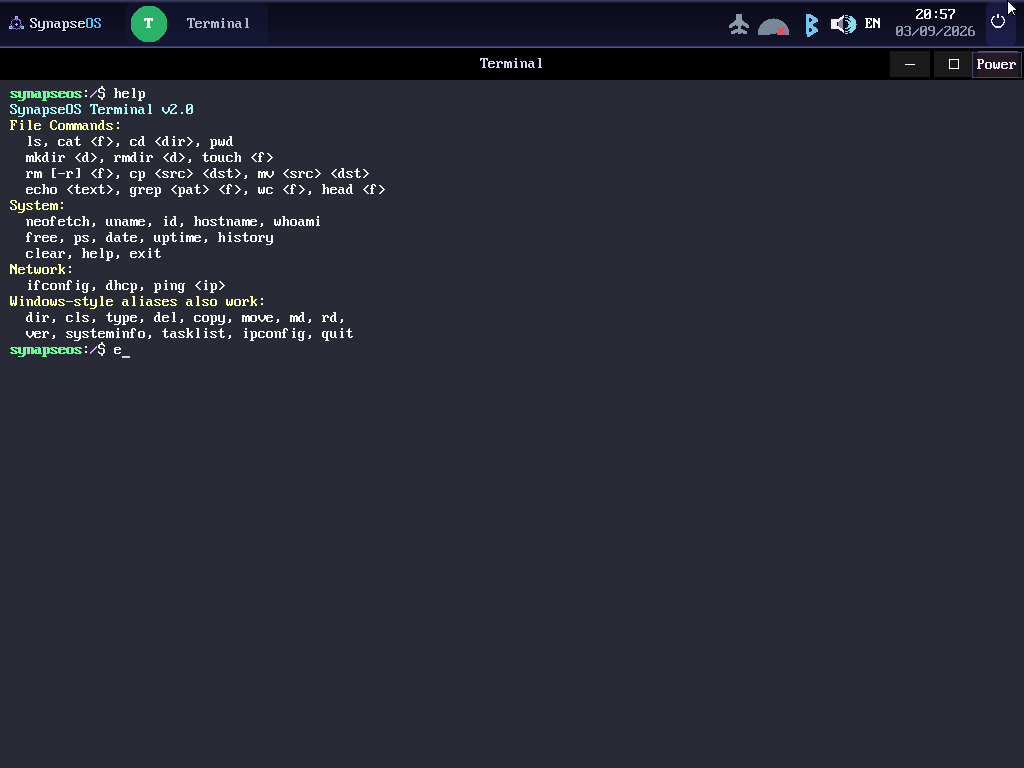
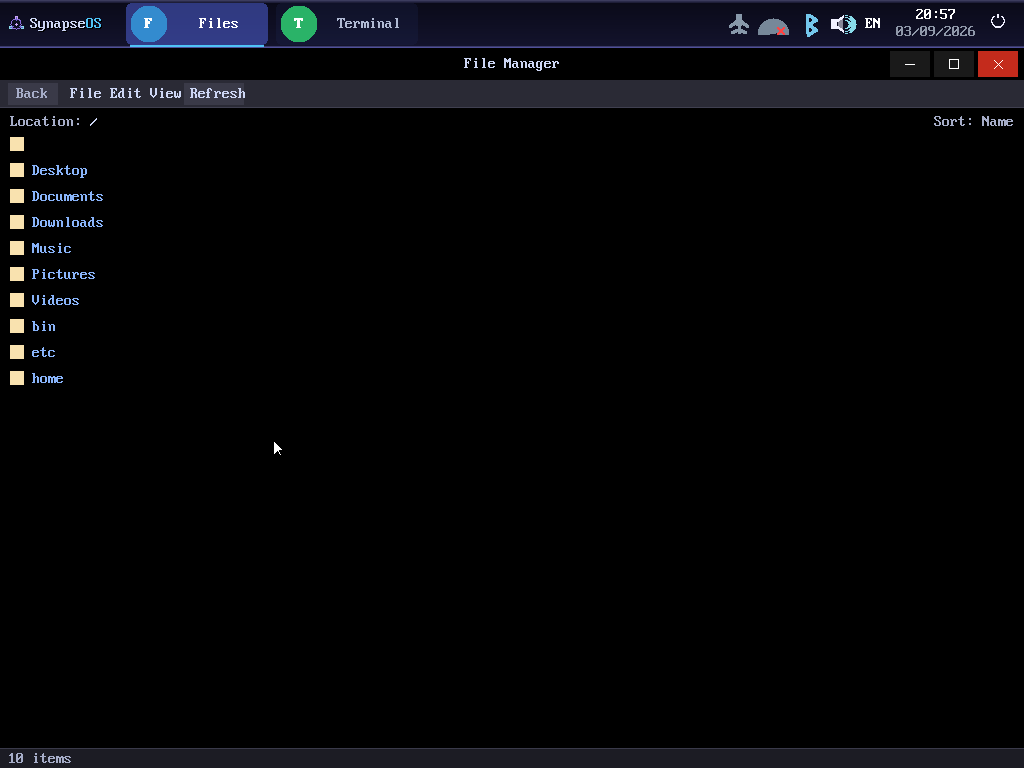
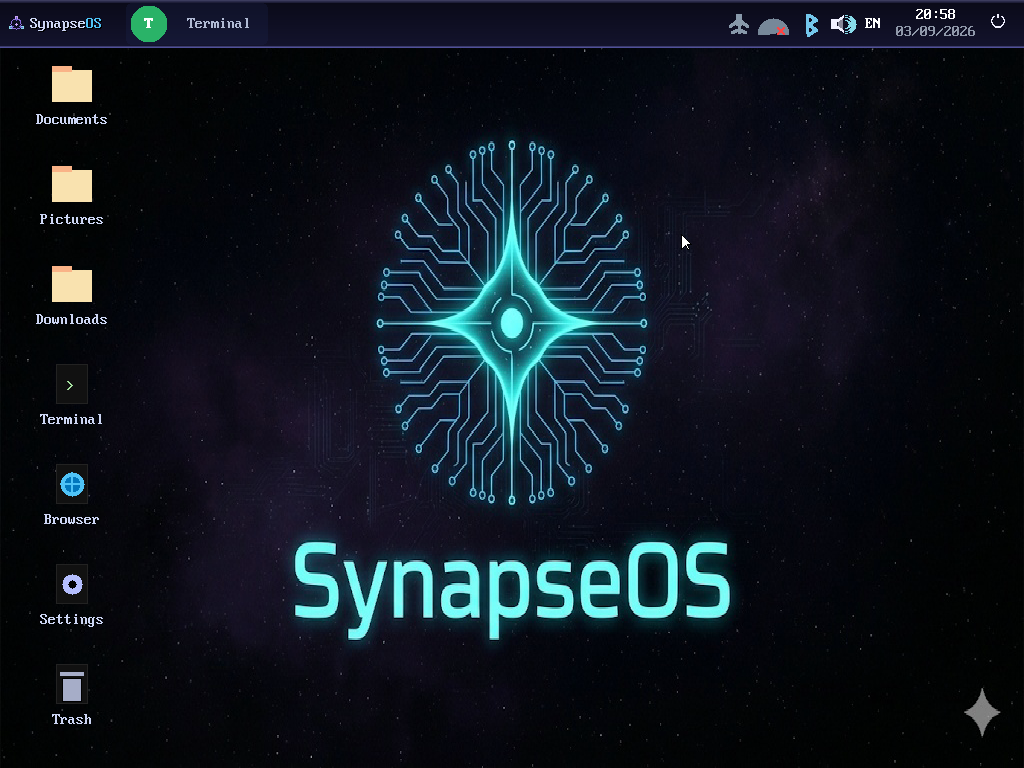
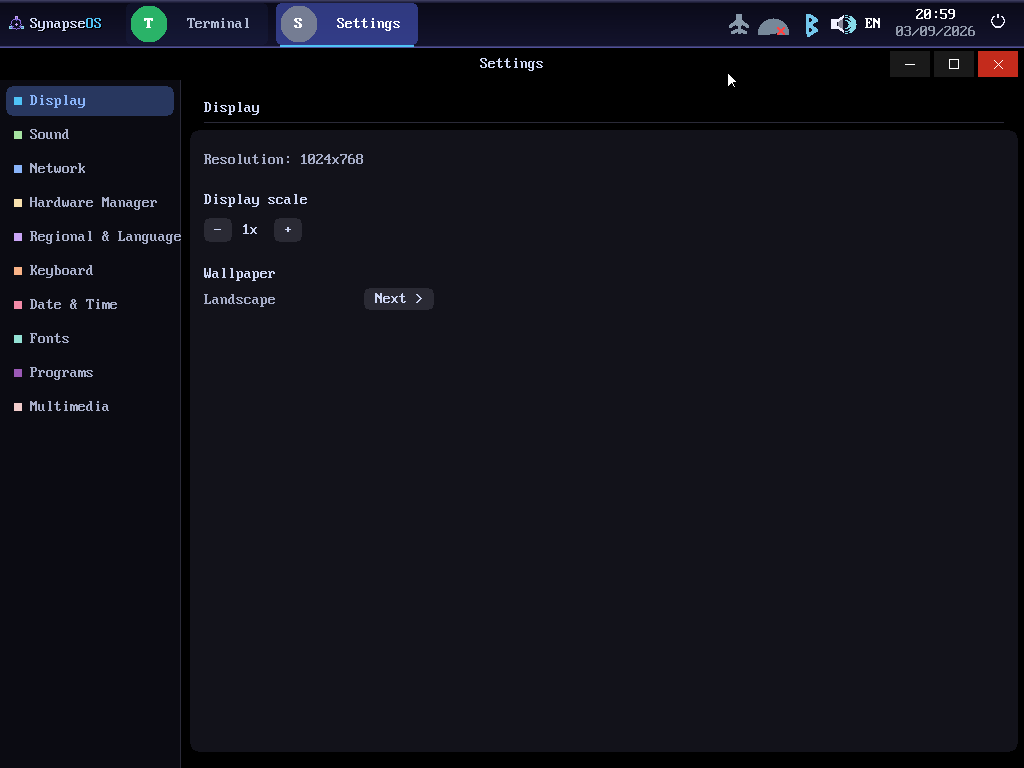
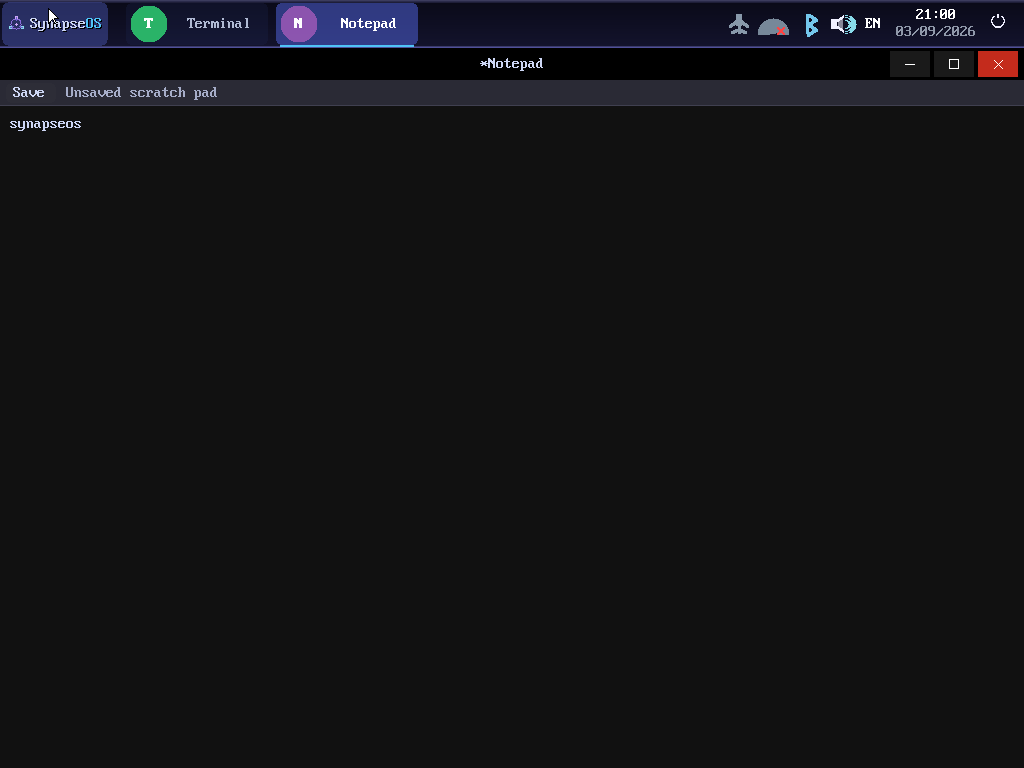
• A complete graphical desktop environment with a macOS-style compositor and window manager, built entirely from scratch.
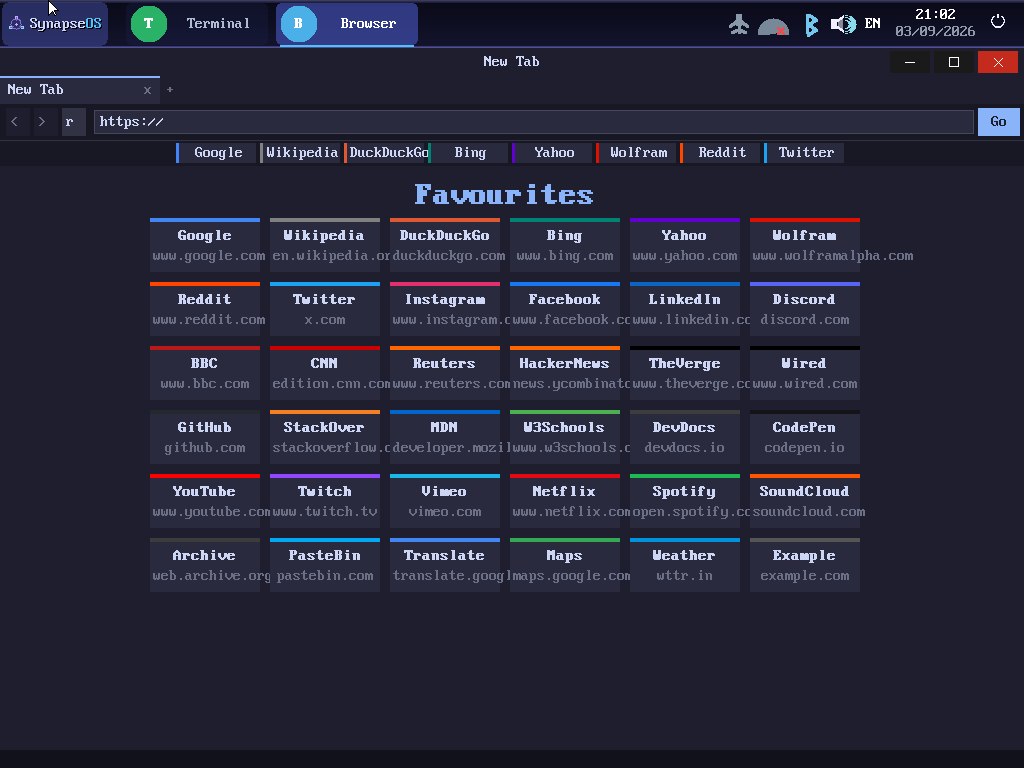
• SynapseOS Navigator — a native HTTP/HTTPS web browser with its own HTML/CSS layout and render engine, secured with a built-in TLS 1.2 client.
• Full FAT32 filesystem support with a Unix-style permission model and disk installer (MBR + FAT32).
• Networking stack: RTL8139 NIC driver, ARP, IPv4, ICMP, and TCP.
• On-board cryptography: AES-128, SHA-256, SHA-1, and HMAC — implemented in the kernel with no external libraries.
• Audio support via Intel HDA, including MP3 playback and MIDI.
• A guided first-boot setup wizard (7-step out-of-box experience).
• A preemptive round-robin task scheduler supporting up to 32 concurrent tasks.
WHY SYNAPSEOS IS DIFFERENT
Unlike toy or teaching kernels, SynapseOS runs as a single, self-contained kernel image with no libc, no POSIX layer, and no runtime borrowed from an existing OS.
Every subsystem — from the UEFI boot handoff through the GUI, browser, filesystem, and network stack — is implemented directly in the kernel itself, all initialized
in a strict, logged, dependency-ordered sequence with serial-console diagnosticsat every step.
SYSTEM REQUIREMENTS
• 64-bit CPU (long mode) with RDTSC support
• 512 MB RAM minimum
• Any UEFI 2.x firmware (legacy BIOS also supported)
• PS/2 or USB HID keyboard
• Optional: RTL8139-compatible NIC for networking, Intel HDA for audio
WHO IT’S FOR
Computer science students, OS development enthusiasts, embedded/systems programmers, and anyone curious about what really happens between power-on and a working desktop.
Full technical documentation (architecture, boot process, kernel internals, filesystems, networking, and security) is included with every purchase.