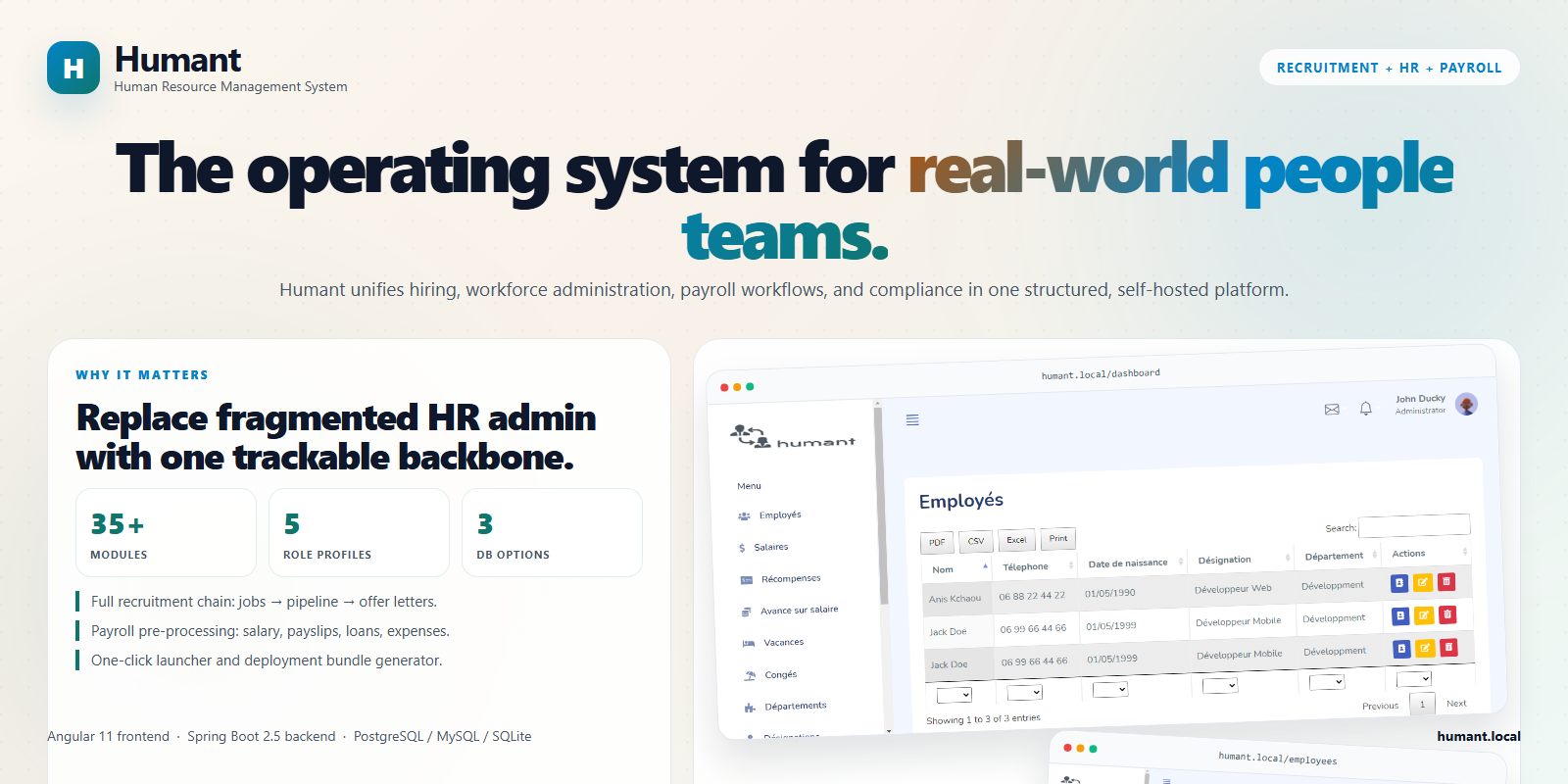
Humant is a multi-tenant SaaS Human Resource Management System built with Angular 11 on the frontend and Spring Boot 2.5 on the backend, backed by a PostgreSQL database. It is designed to run as a commercial SaaS product where multiple companies — called tenants — each operate within their own isolated workspace, with their own employees, data, users and subscription plan. Payments and subscription management are handled through Stripe, with webhook-driven automation for subscription lifecycle events.
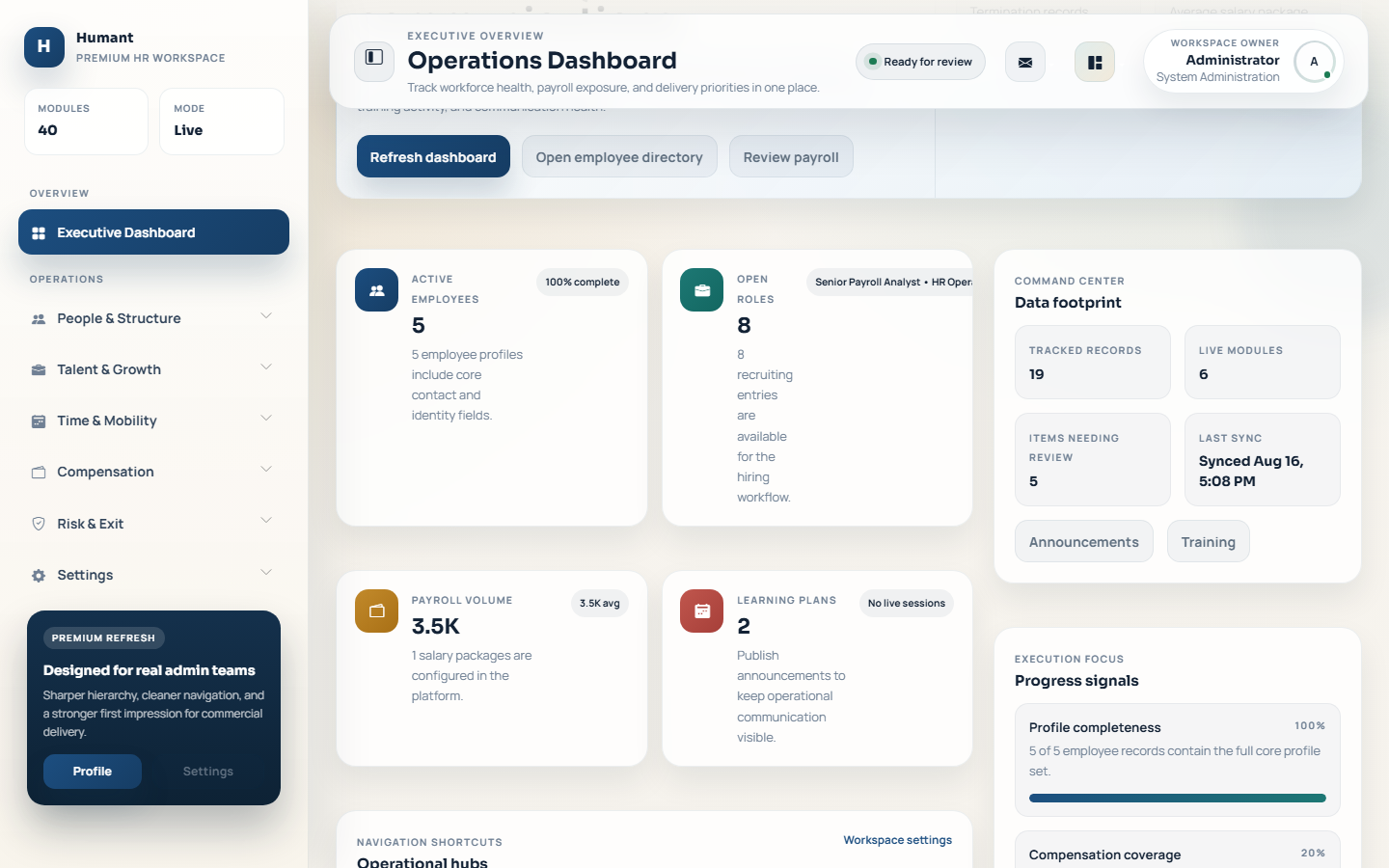
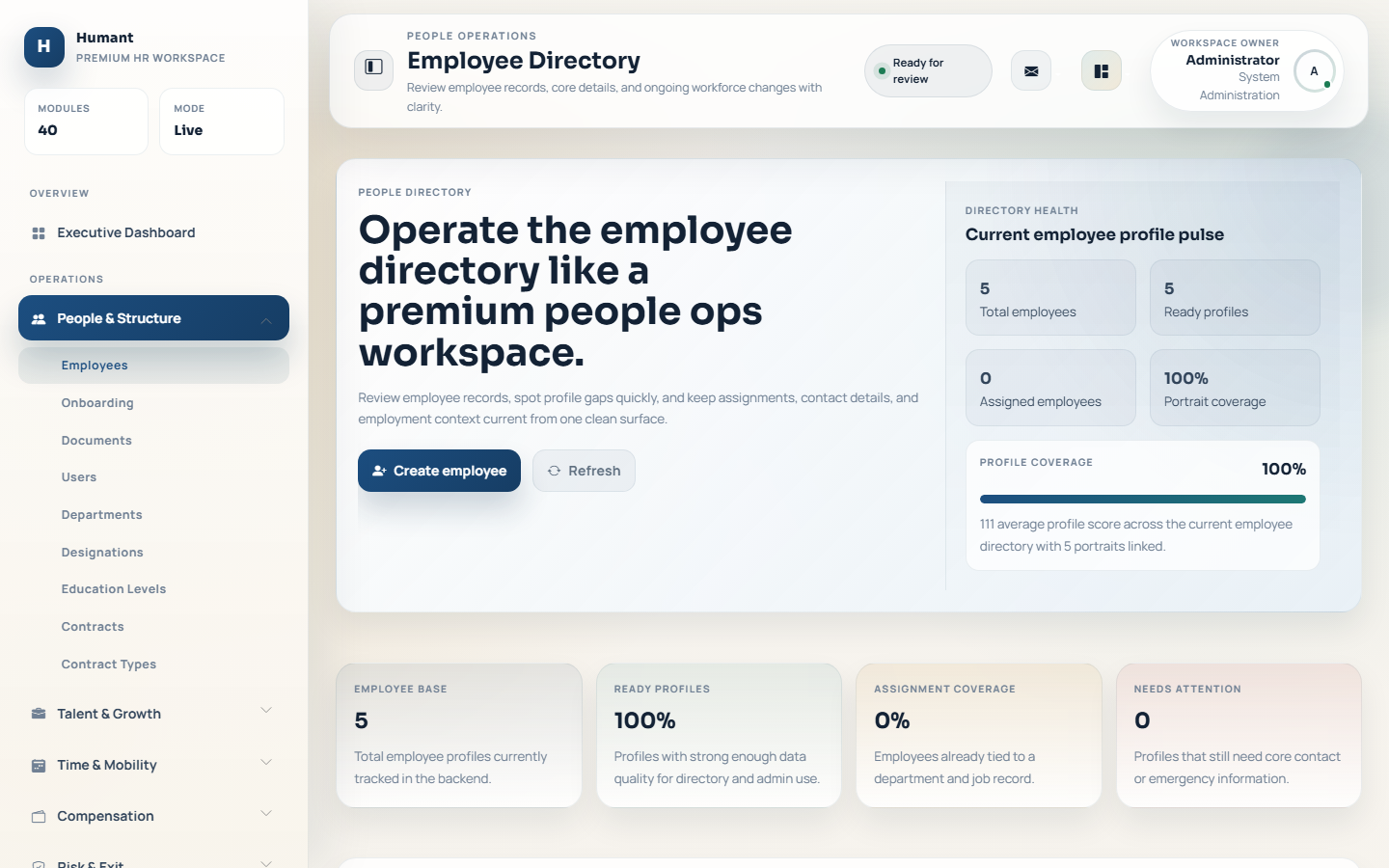
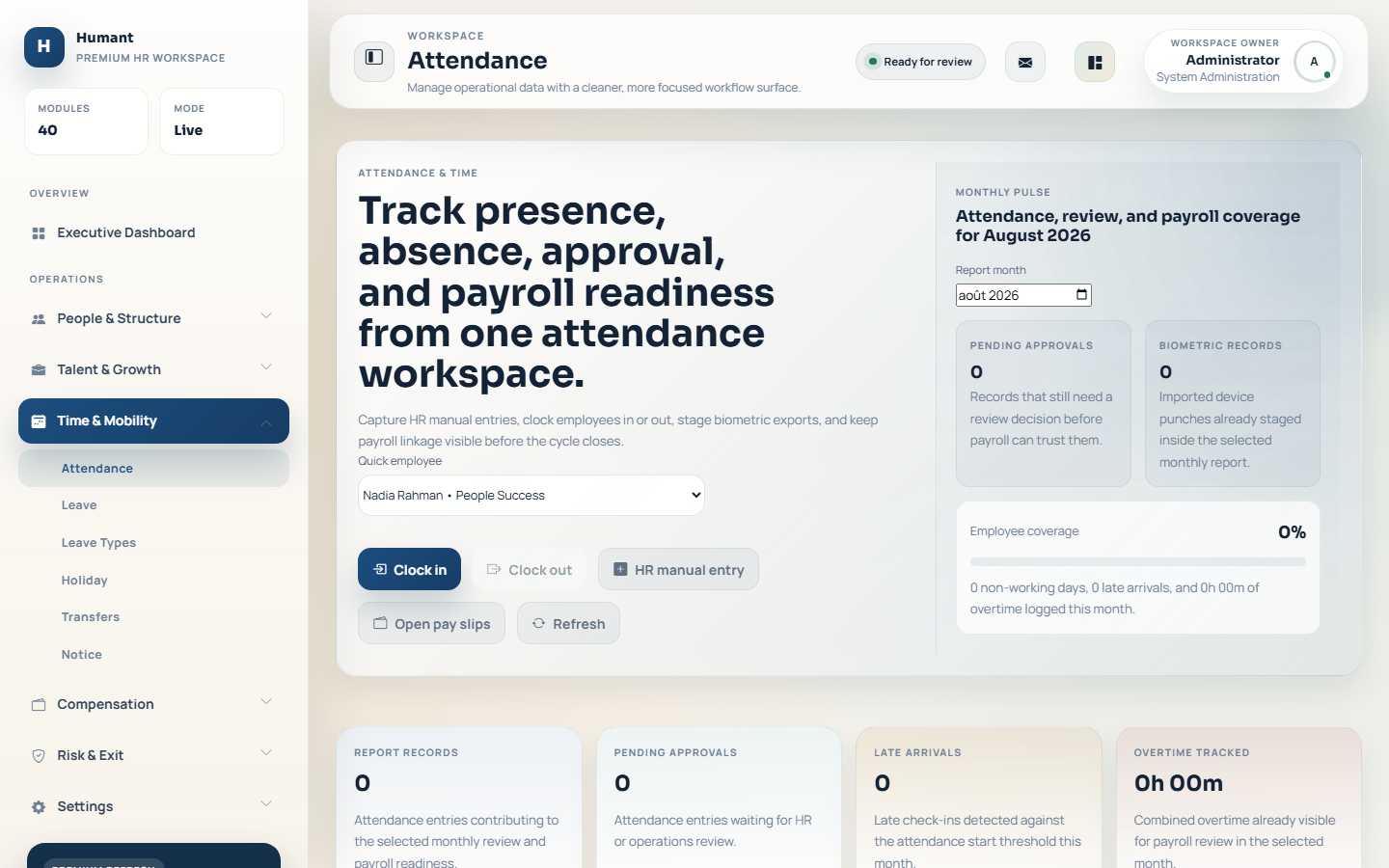
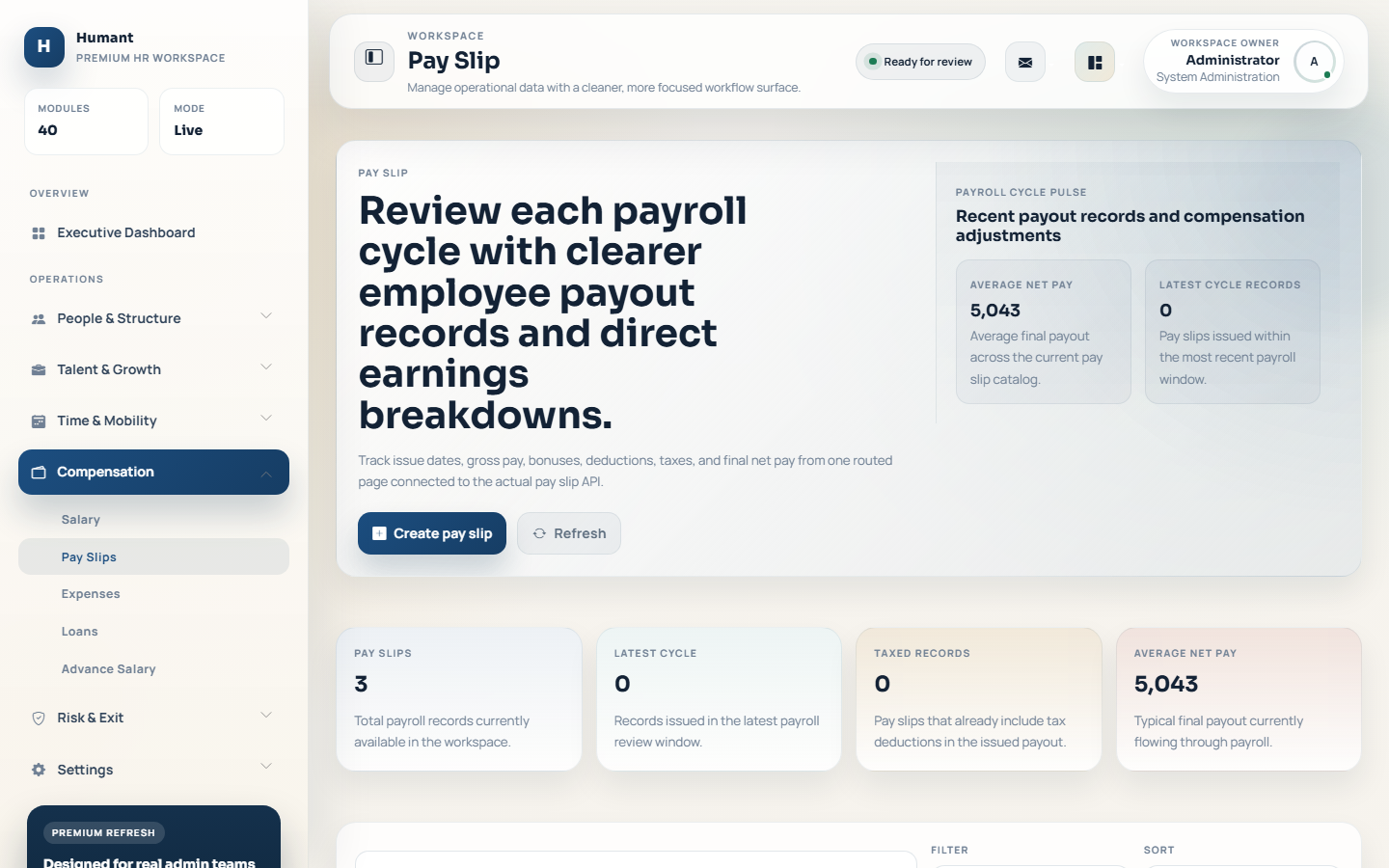
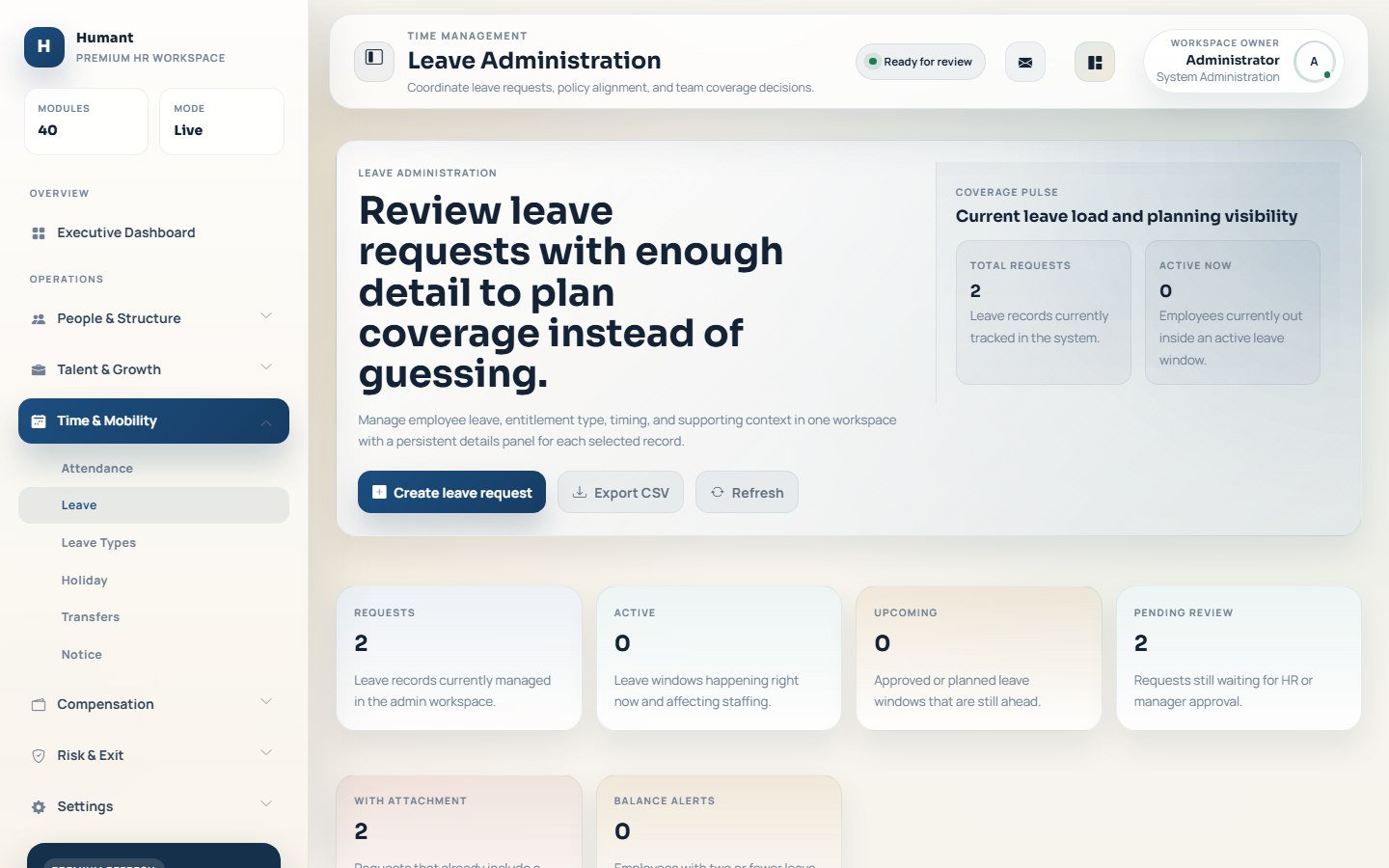
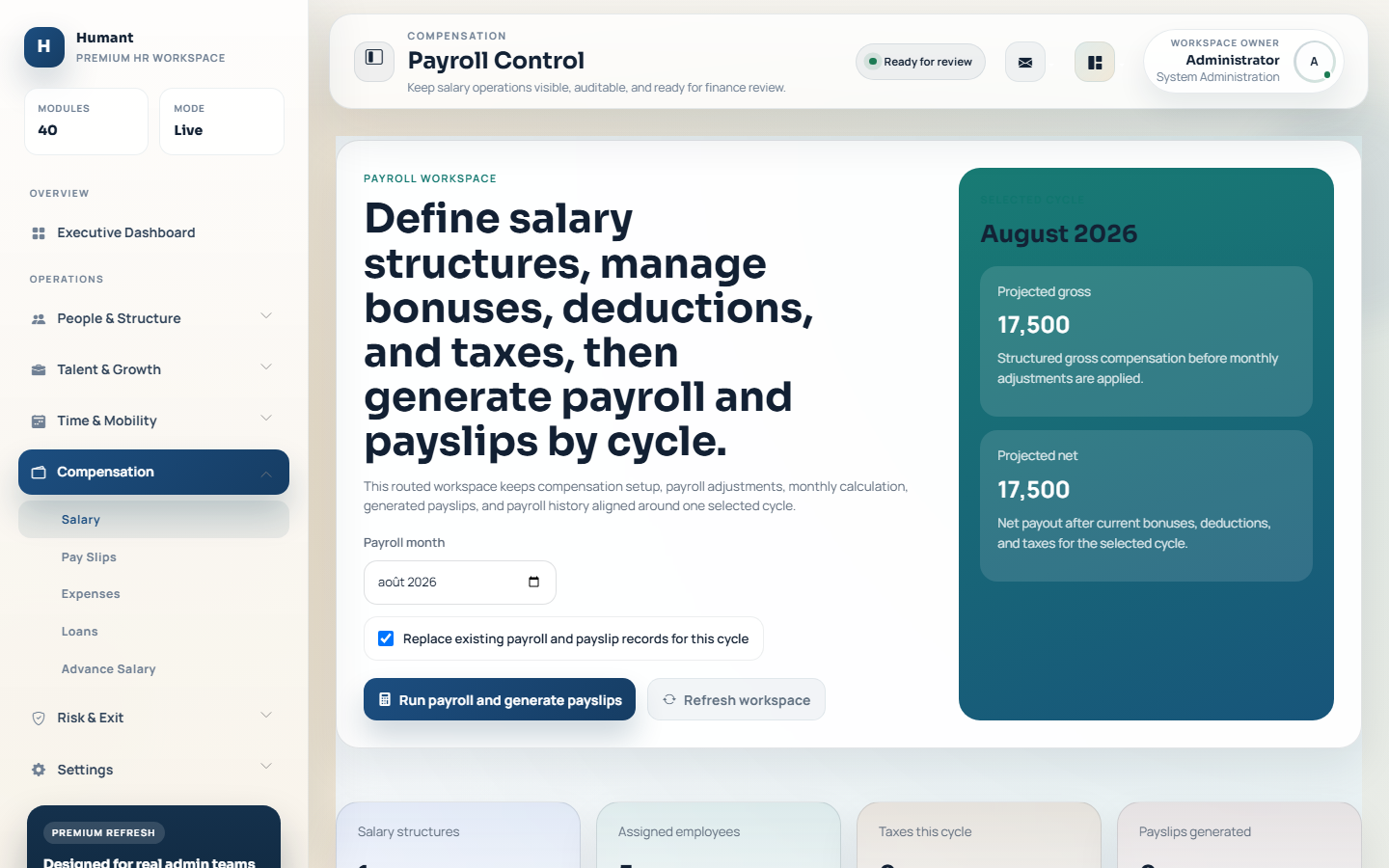
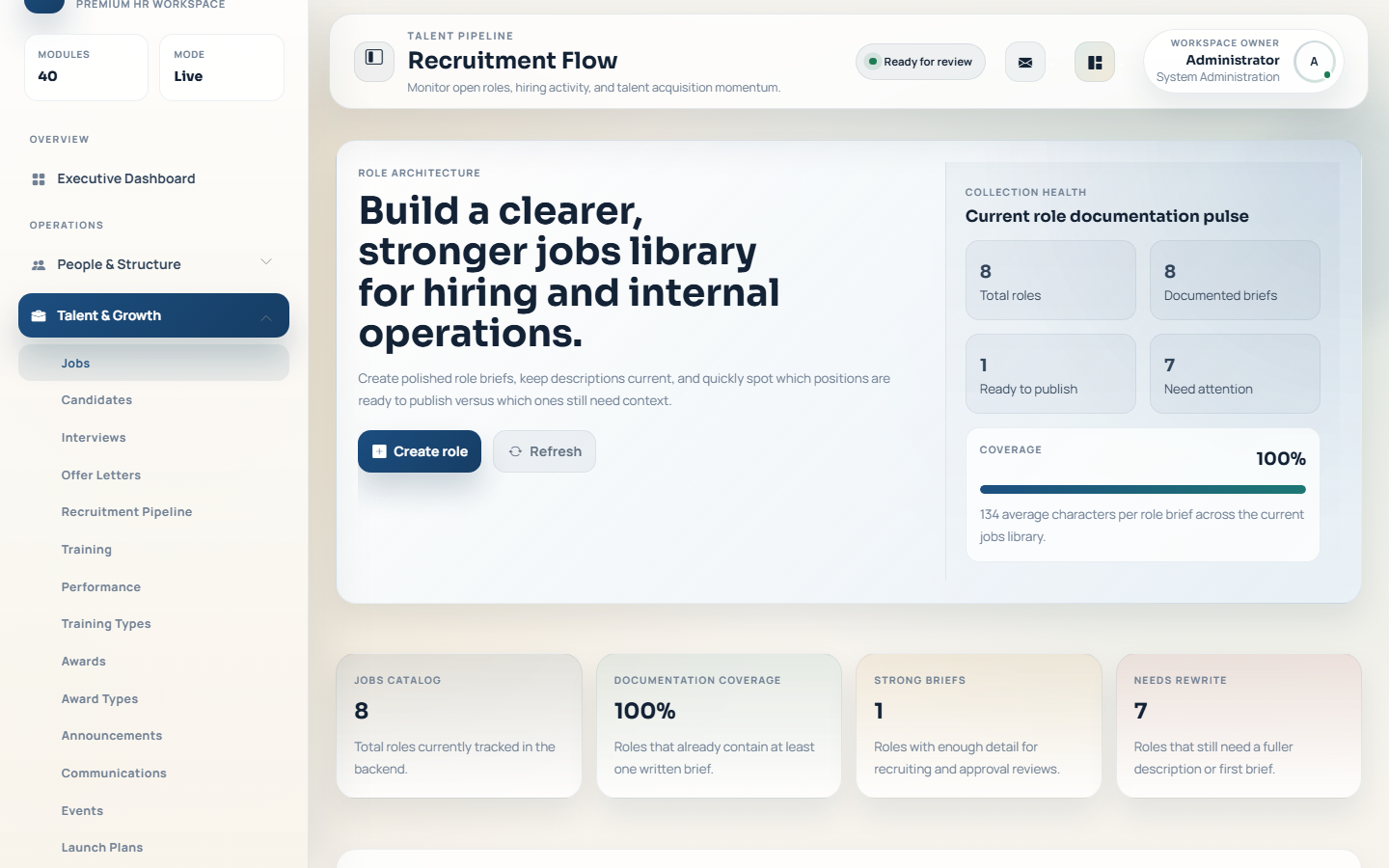
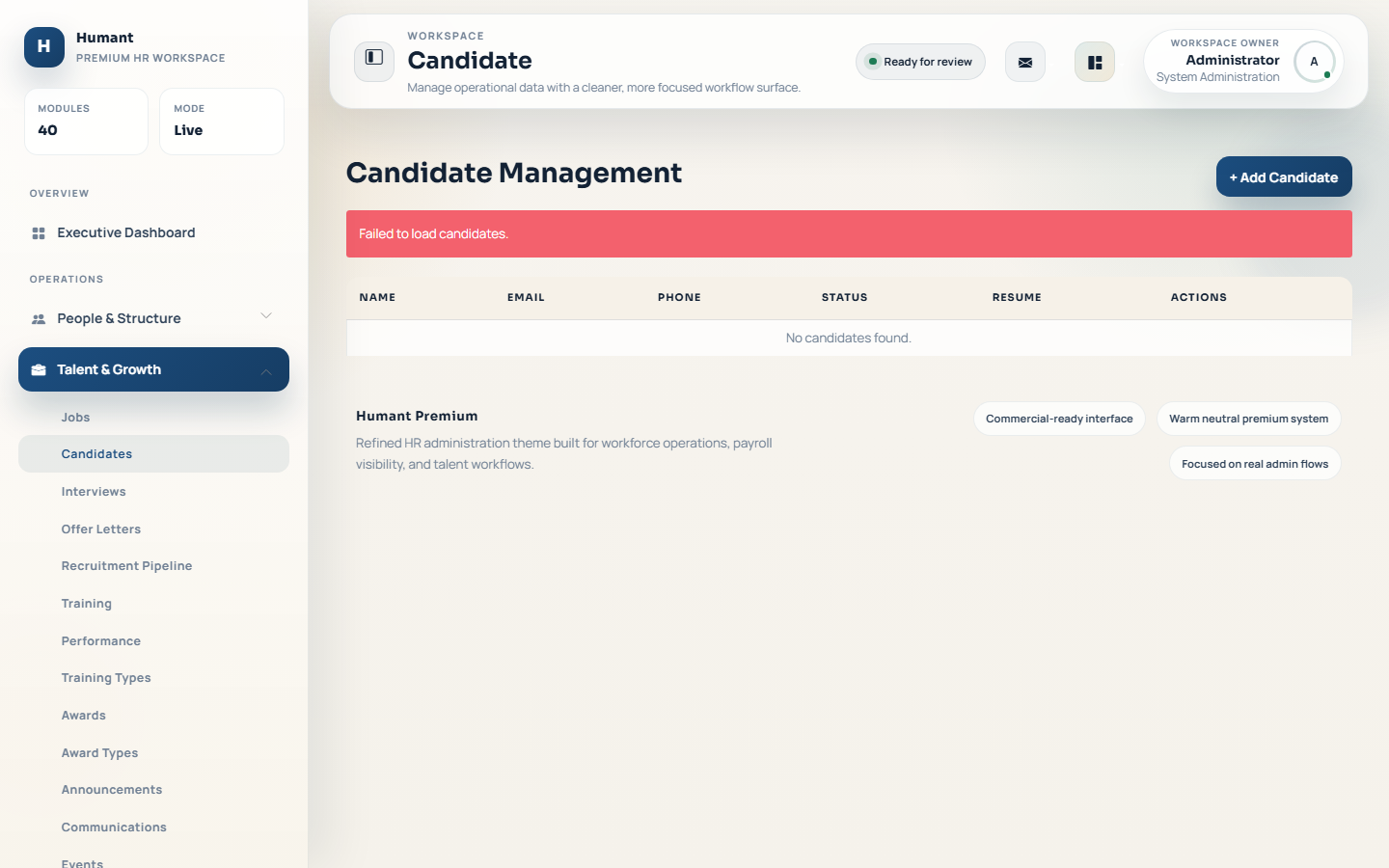
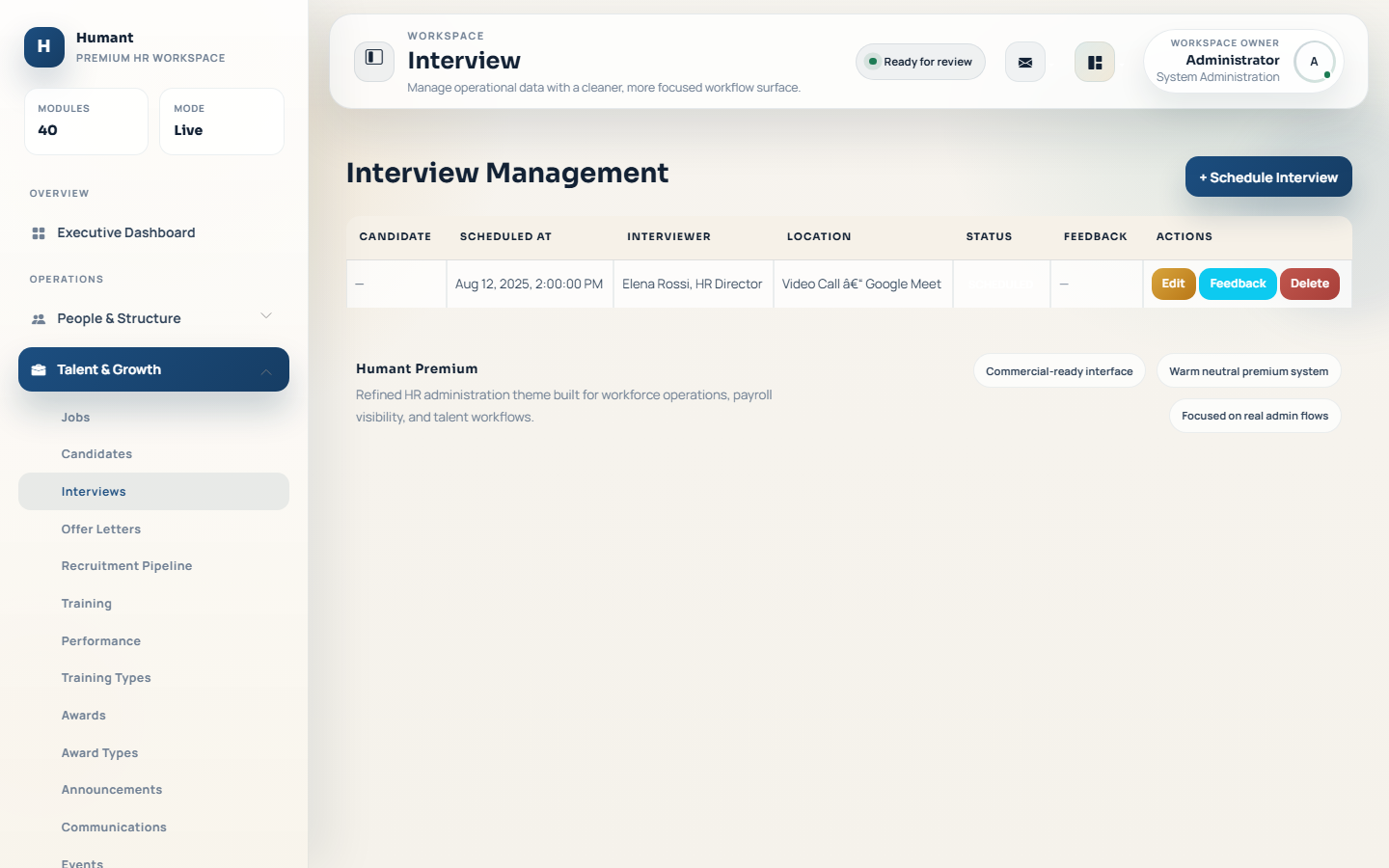
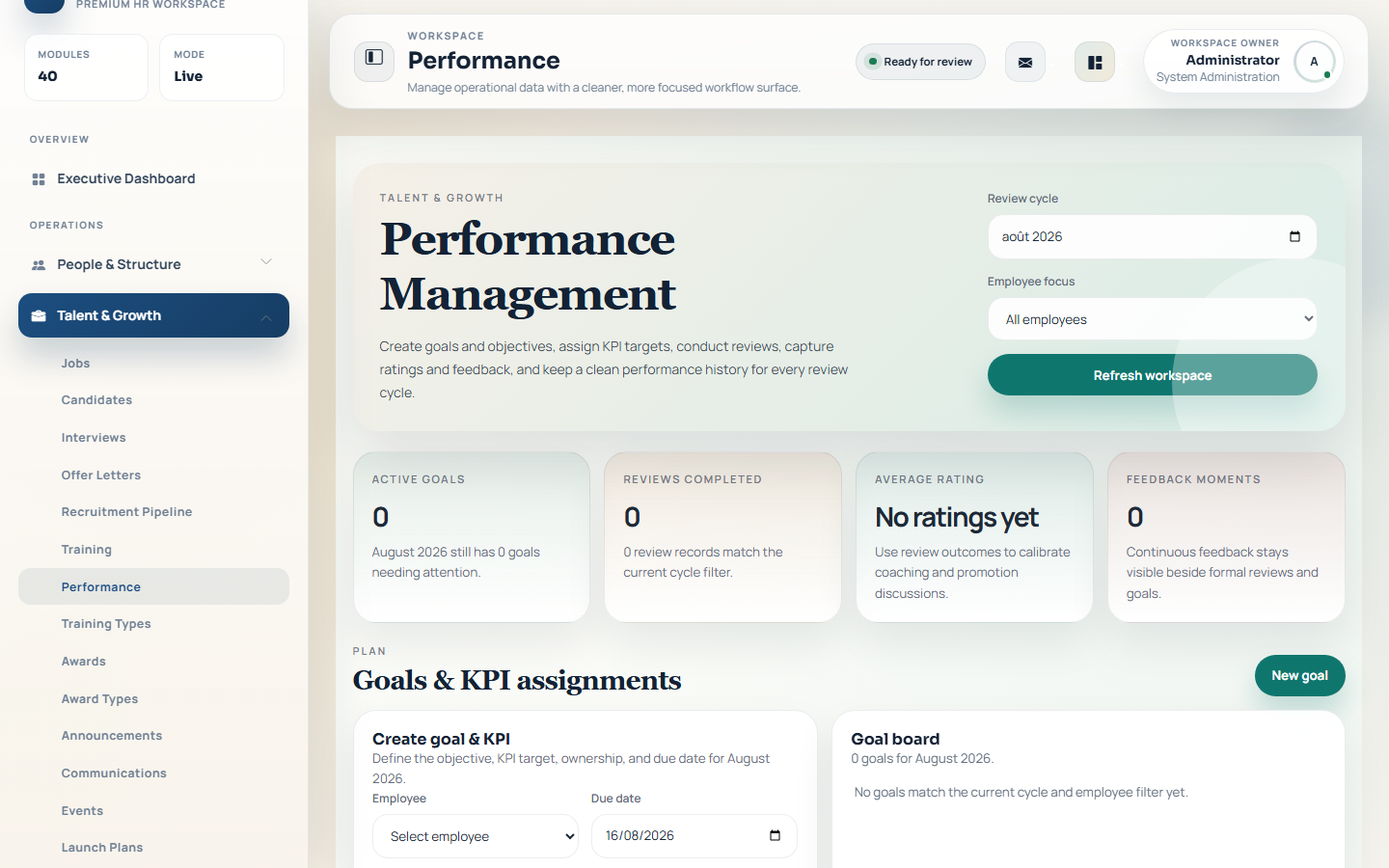
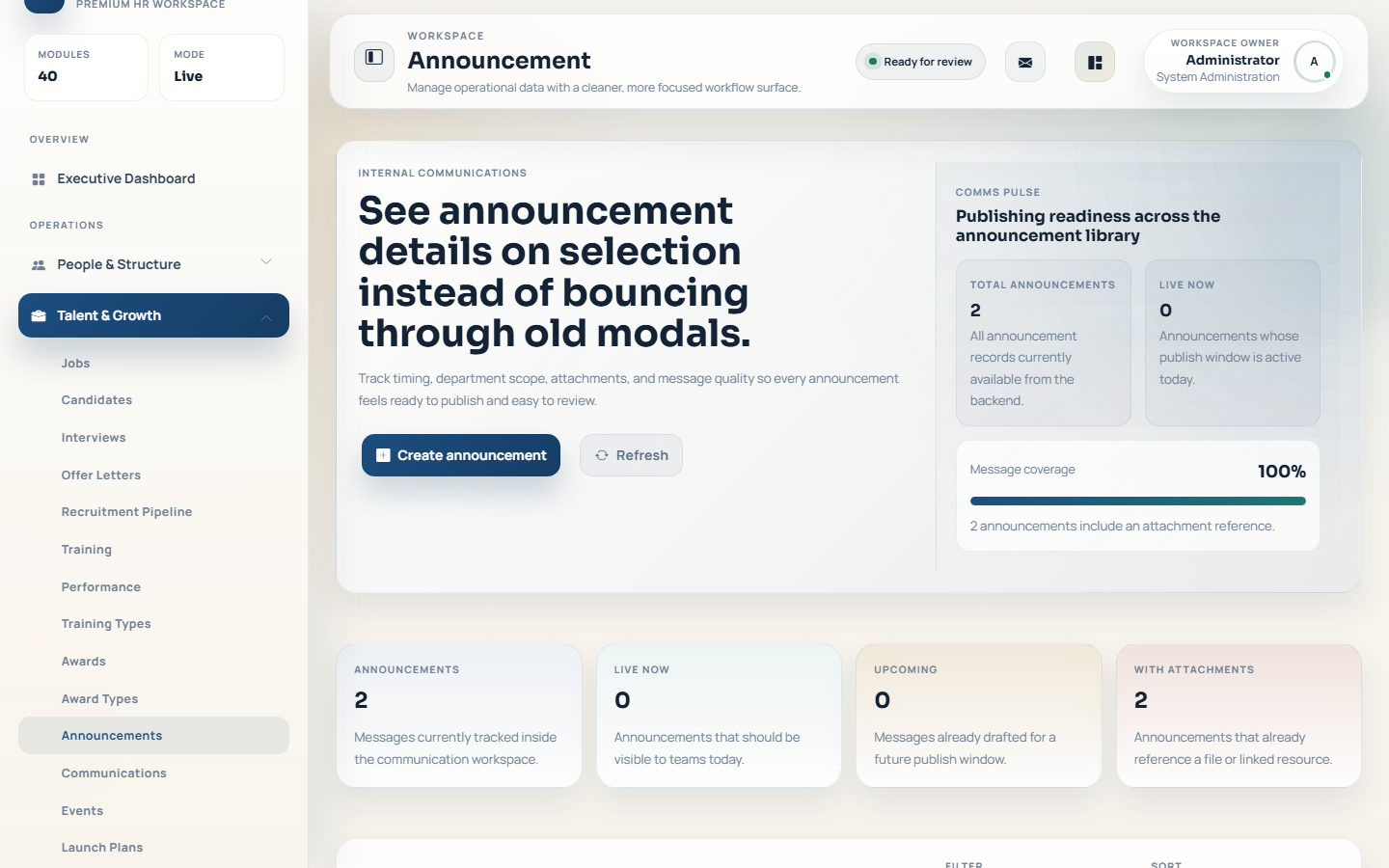
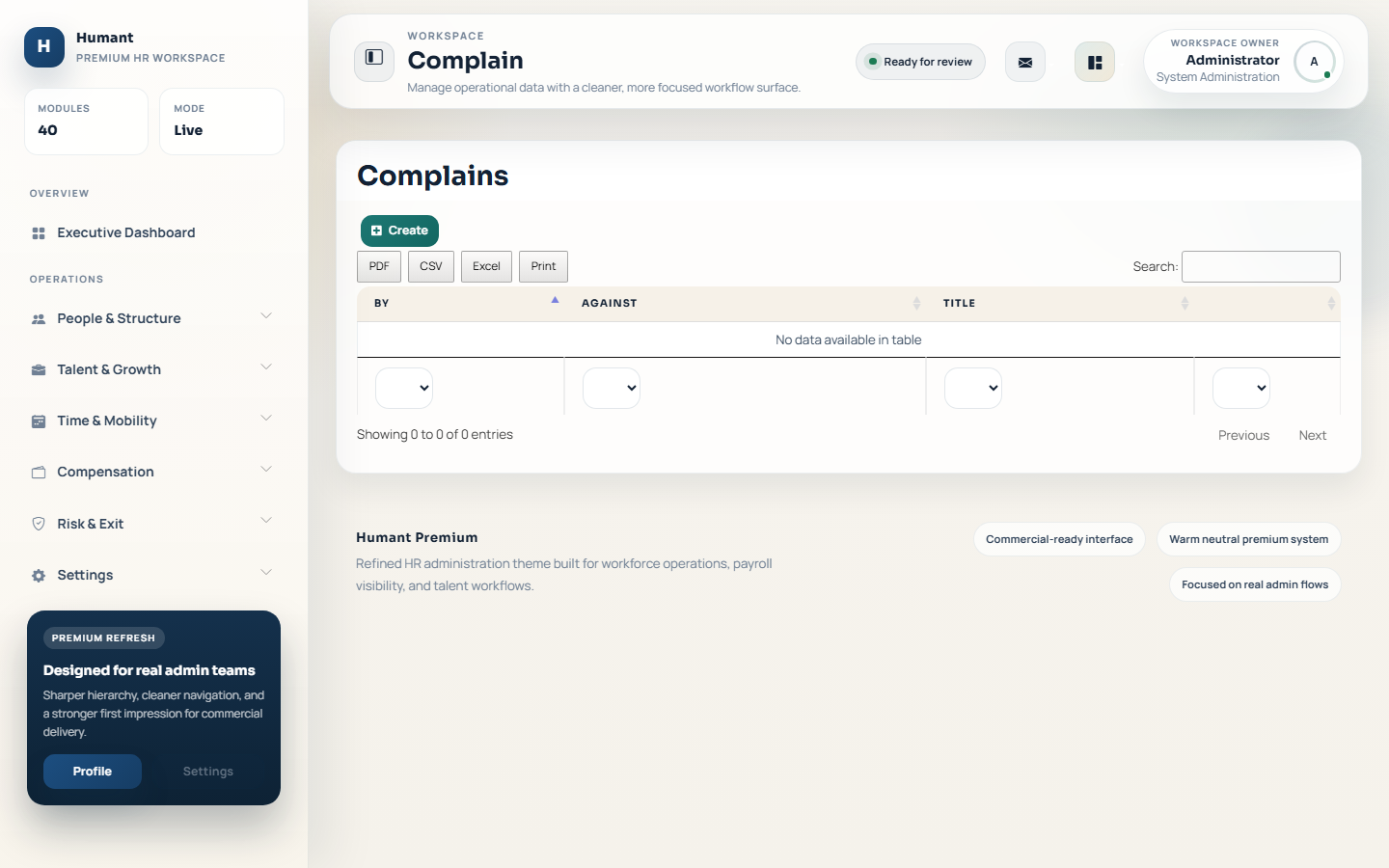
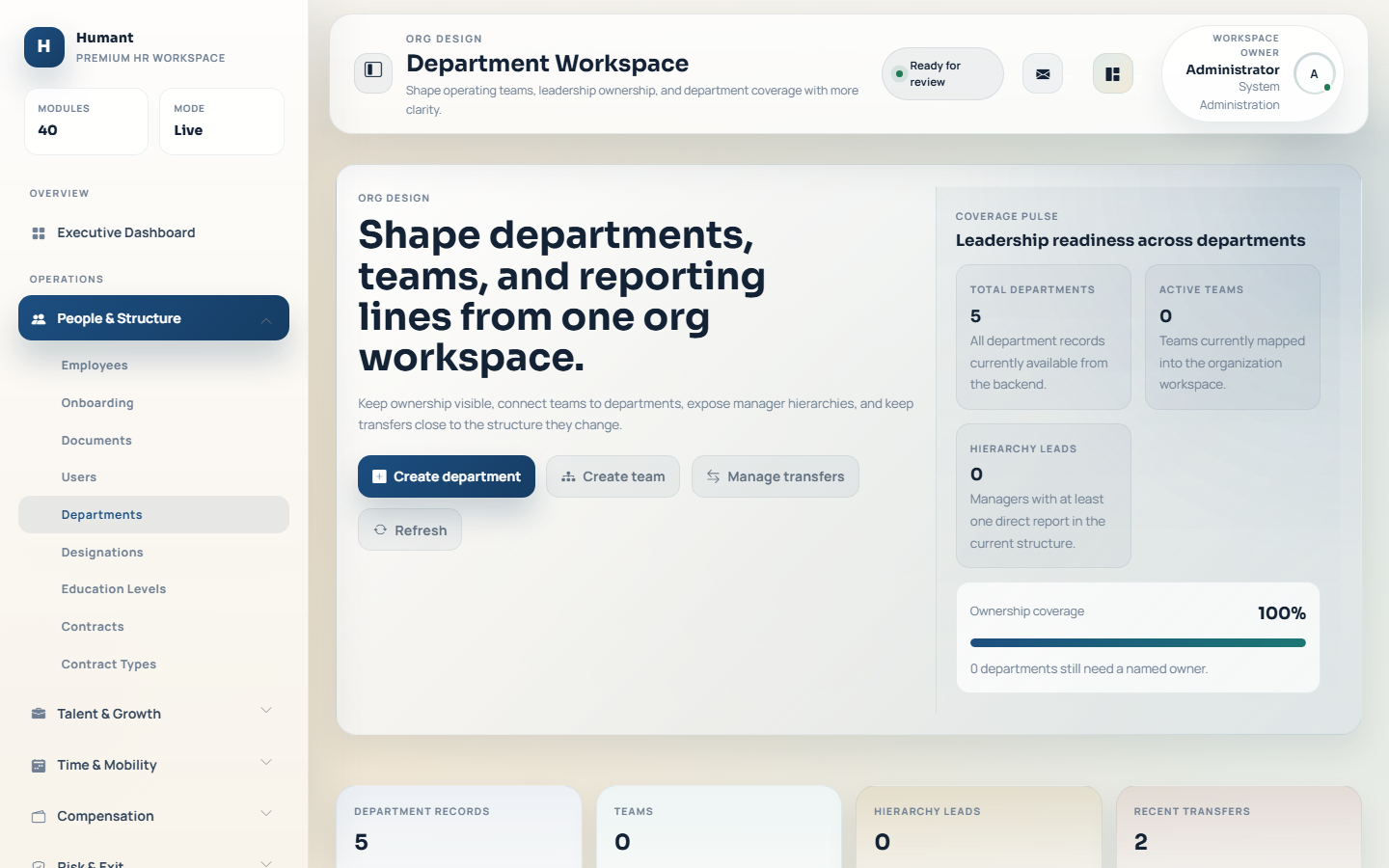
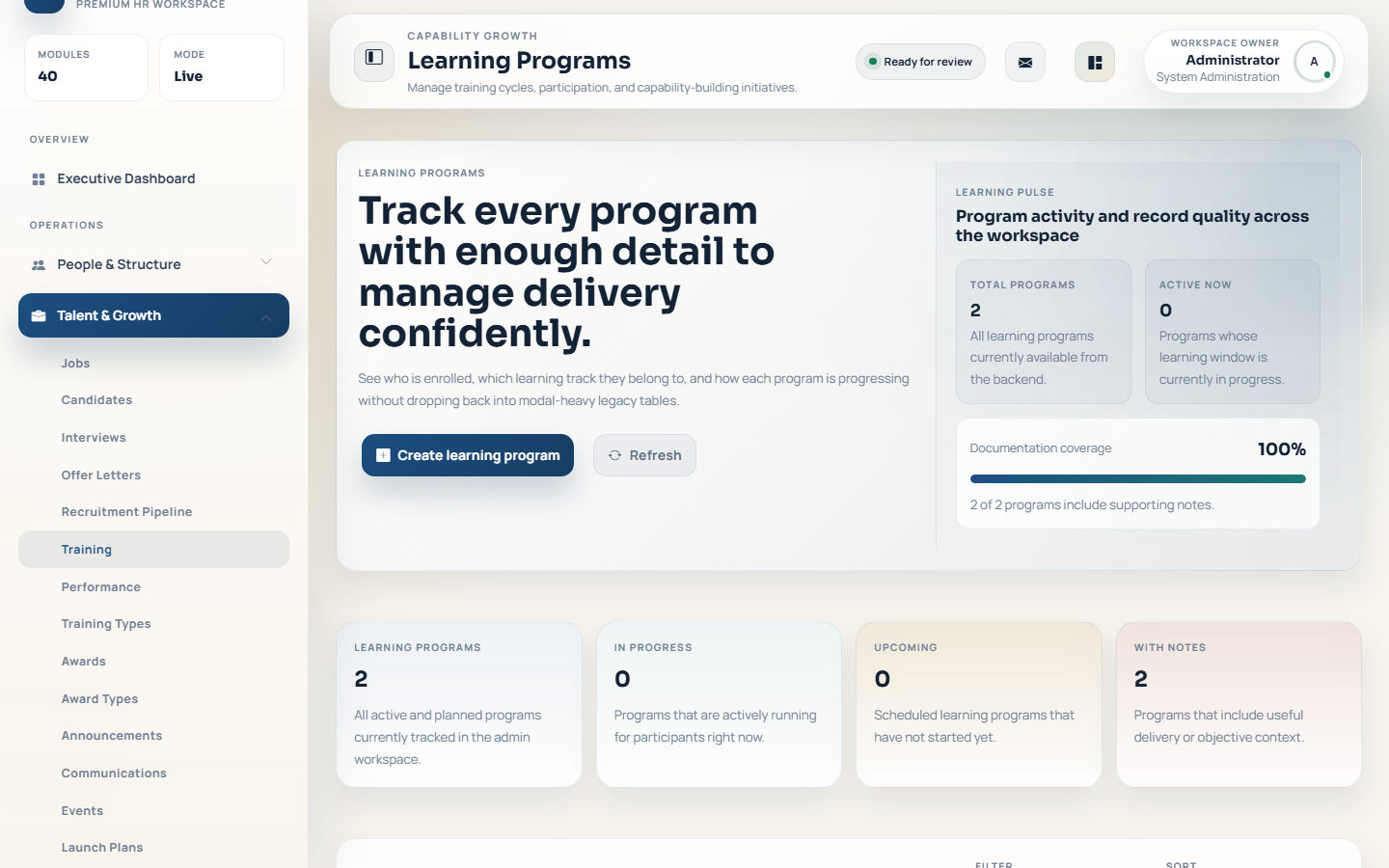
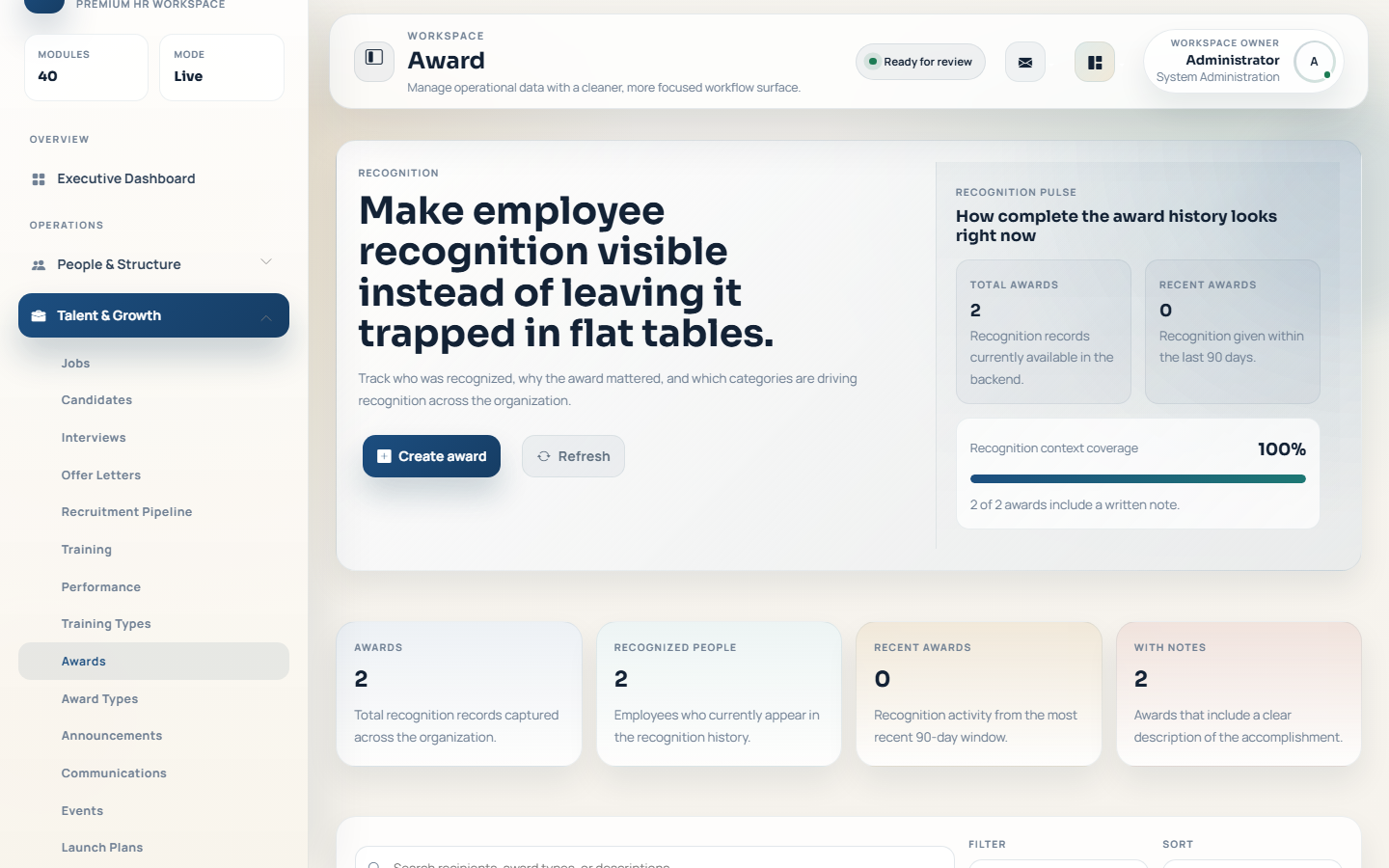
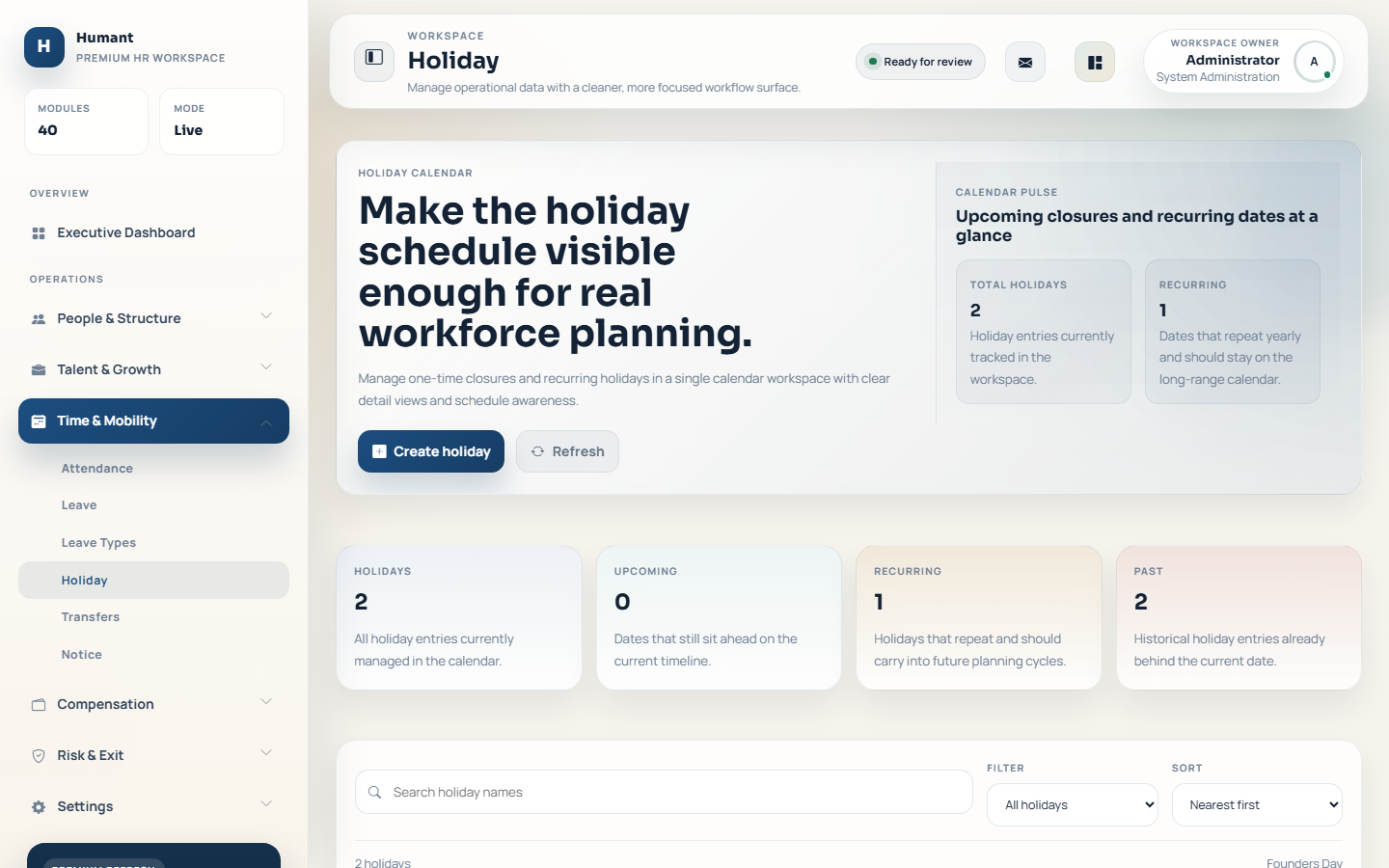
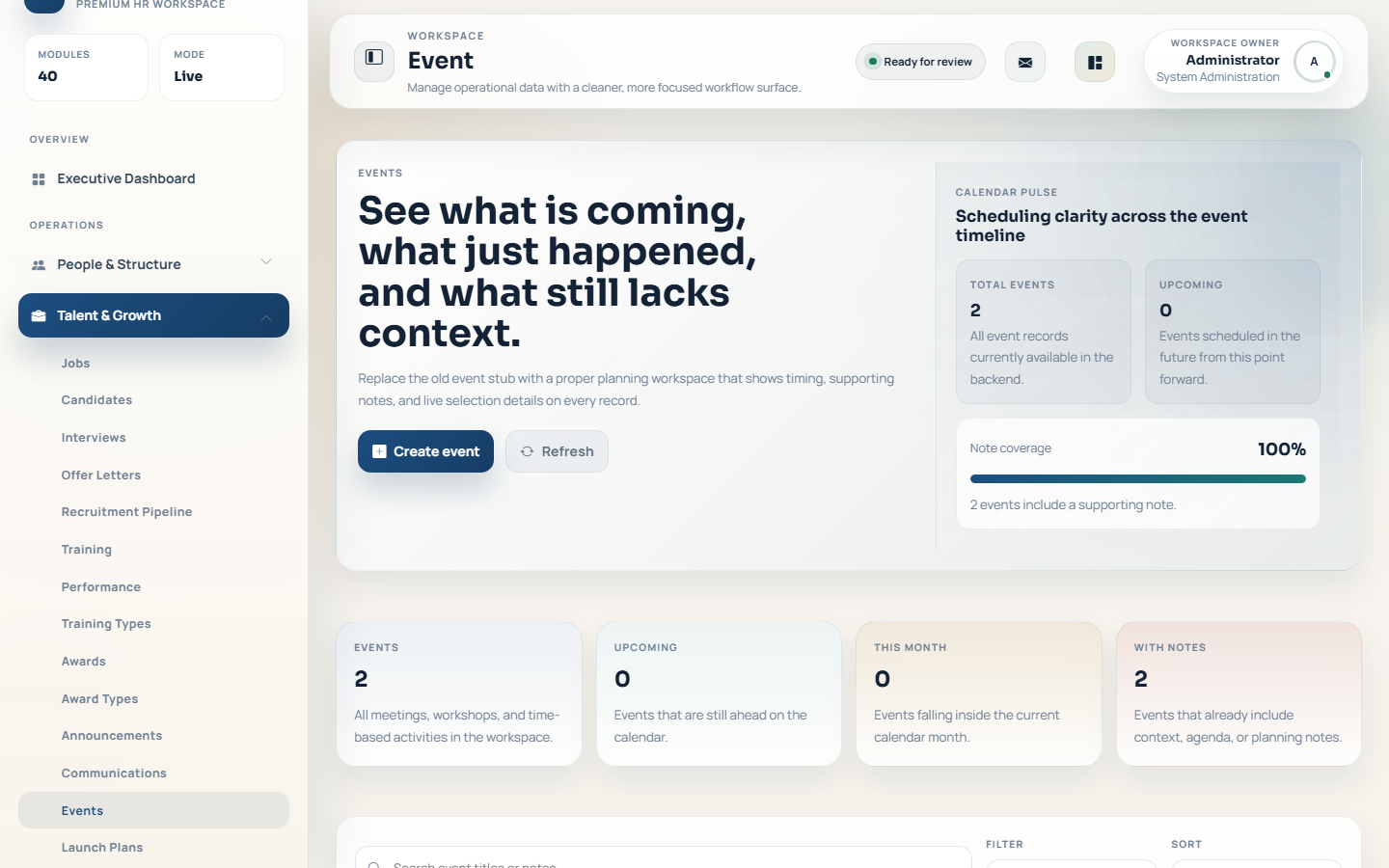
The core HRMS covers the full employee lifecycle across 40 modules. On the people side, it manages employee profiles, contracts, documents, departments, designations and education levels, along with onboarding checklists and multi-role user access. The recruitment side includes job postings, a candidate pipeline, interview scheduling, offer letters and pipeline stage tracking. Time management covers attendance, leave with configurable leave types, holiday calendars, transfers and notices. Compensation features include salary management, payslips, expense claims, loans and advance salary. The platform also covers performance reviews, goal tracking, training programmes, mentorship, awards, internal communications, announcements, events, complaints and exit management including resignations, terminations, exit interviews and final settlements.
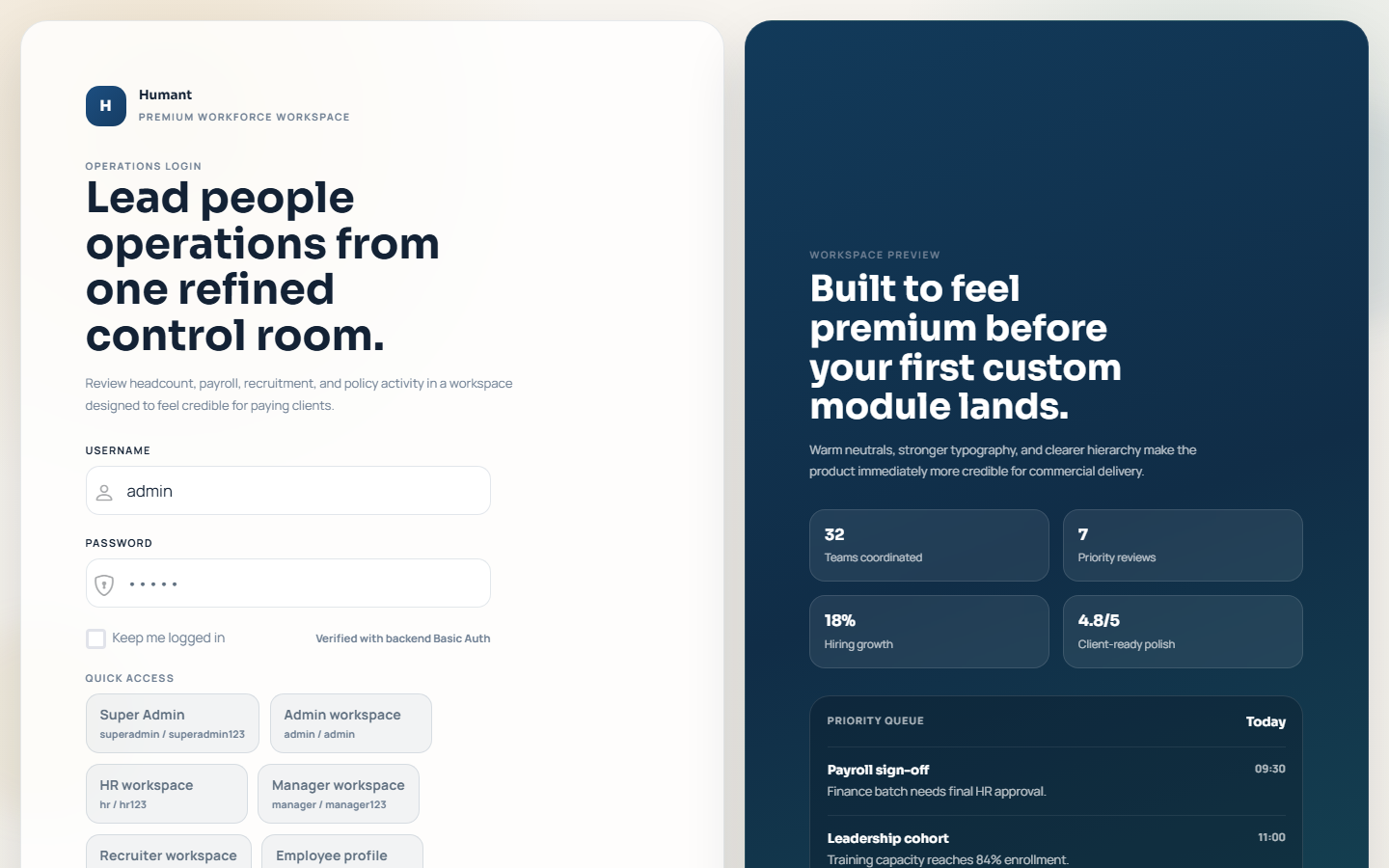
Role-based access control governs what each user can see and do. The roles — Super Admin, Admin, HR, Manager, Recruiter and Employee — each have different route permissions and module visibility, enforced both on the frontend through route guards and on the backend through a tenant resolution filter and Spring Security. Access policies can be customised per role and stored in the database, allowing fine-grained control over sensitive sections like payroll and user management.
The Super Admin portal is a completely separate interface, accessible only to platform administrators, designed to run the SaaS business itself rather than any individual company. It provides a real-time overview dashboard with sixteen KPI cards covering revenue metrics such as MRR, ARR, ARPU, CLV and churn rate, alongside operational signals like active tenants, trial counts, storage consumption and API usage. A full analytics section breaks down customer growth, subscription distribution, revenue by plan and country, a twelve-month trend chart, and product engagement metrics including daily, weekly and monthly active users and feature adoption rates.
Tenant management allows creating, editing, archiving and restoring companies, with a full thirty-field profile covering industry, company size, country, currency, timezone, language, domain, branding and owner information. Subscription lifecycle management supports starting trials, extending them, converting to paid, upgrading, downgrading, pausing, resuming and cancelling — all from a per-tenant card view. Plans and pricing are fully configurable through a CRUD interface where each plan has its own monthly and annual price, user and employee limits, storage quota, API rate limit and a feature list. Feature flags form a matrix where each feature can be toggled globally, per plan, per individual tenant, or rolled out gradually by percentage, with optional scheduled activation and deactivation.
The billing section provides a complete invoice management system — generate, send, mark paid, void and refund — alongside a payment history table with retry and partial refund support and Stripe integration metadata. The Customer 360° view assembles a unified profile for any tenant including their company details, subscription status, billing information, usage statistics and a computed health score. Platform user management allows creating internal staff accounts such as billing managers and support agents, while the roles and permissions system supports six built-in system roles and custom roles with eleven granular permissions controlling actions like viewing tenants, managing plans, processing refunds and accessing audit logs.
The integrations section comes pre-loaded with eighteen configured connectors spanning identity providers — Microsoft Entra ID, Google Workspace, Okta, SAML 2.0, OAuth 2.0 and SCIM — HR and payroll tools including ADP, QuickBooks, Xero, Greenhouse ATS, Workday, Gusto and Expensify, and communication platforms including SendGrid, Twilio, Slack and Microsoft Teams. Each integration supports enable/disable, credential configuration, connection testing, manual sync triggering and a live log display.
The database is seeded with realistic, production-quality data — five named employees, ten tenants across all statuses and plans, twelve recruitment candidates with pipeline stages and offer letters, seventeen feature flags, eighteen integrations, eleven invoices and nine payments. Every seed statement uses a WHERE NOT EXISTS guard so the data is idempotent across restarts, eliminating the duplicate data accumulation that plagued the original setup. The entire backend compiles cleanly and the Angular frontend builds without errors, with the application fully functional end to end.