Exploring the System Class in Java

Java is a versatile and powerful programming language known for its extensive standard library, which includes various classes and utilities for interacting with the system and managing application resources. One such essential class is the System class. In this article, we'll take a deep dive into the System class, understand its significance, and explore…

0 Comments

Exploring the Runtime Class in Java

The Runtime class is a core part of the Java language and resides within the java.lang package. It allows Java applications to interact with the runtime environment in which they are executed. The java.lang.Runtime class in Java provides a way to interface with the runtime environment in which a Java application is running. It…

0 Comments

Clonable in Java: A Guide to Object Cloning

In Java, Clonable is an interface that serves as a marker, indicating that a class is eligible for object cloning. Object cloning refers to the process of creating a duplicate, or clone, of an object. Cloning can be a valuable tool for making copies of objects when you want to preserve the state of…

2 Comments

Math class in Java

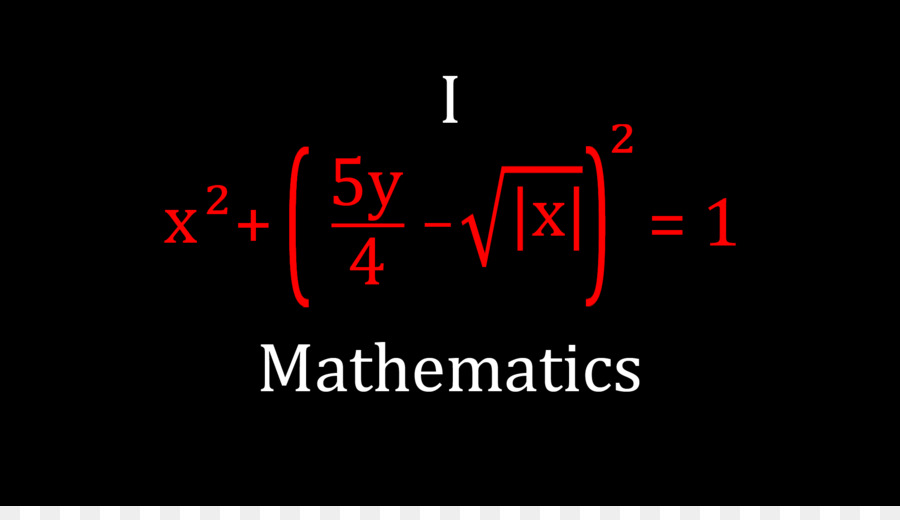
The class Math contains methods for performing basic numeric operations such as the elementary exponential, logarithm, square root, and trigonometric functions. Java provides a robust set of mathematical operations through the java.lang.Math class. This class is part of the core Java API and contains static methods for various common mathematical functions. In this article, we'll explore…

0 Comments

Currency class in Java

Currency handling in Java is typically done using the java.util.Currency class. The Currency class represents a currency according to the ISO 4217 currency codes. Here's a brief overview of the Currency class and an example:

0 Comments

UUID in Java

UUID (Universally Unique Identifier) is a fundamental concept in Java, providing a 128-bit identifier that ensures uniqueness across all devices and time. In Java, the java.util.UUID class facilitates working with UUIDs. These identifiers find extensive use in diverse applications, serving as database primary keys, aiding in distributed system coordination, and uniquely identifying resources.In Java,…

0 Comments

Understanding java.lang.Class in Java

In Java, the java.lang.Class class is a fundamental part of the Reflection API. It allows you to inspect and manipulate the runtime behavior of a Java program. java.lang.Class provides information about a class or interface, such as its fields, methods, constructors, and more. Introduction to java.lang.Class The java.lang.Class class is the entry point for…

0 Comments

Mastering Java HashMap: A Comprehensive Guide for Beginners

In Java, java.util.Map is an interface that represents a collection of key-value pairs. It's part of the Java Collections Framework and provides methods to manipulate and access elements based on their keys. https://youtu.be/o64h90pScKE he java.util.Map interface in Java provides several methods to work with key-value pairs. Here are some of the important methods defined…

1 Comment

Exploring Java 17: Features and Examples

Java 17, a Long-Term Support (LTS) release, brings several new features and enhancements to the Java platform. This tutorial will cover some of the key features introduced in Java 17, along with examples to illustrate their usage. Table of Contents Sealed Classes Pattern Matching for Switch (Preview) Enhanced Pseudo-Random Number Generators New macOS Rendering…

0 Comments

Java 11 Features and Examples

Java 11, released in September 2018, is a significant release of the Java platform with several new features and enhancements that improve the language's productivity, security, and performance. This tutorial will cover some of the most important features introduced in Java 11, along with examples to illustrate their usage. 1. Local-Variable Syntax for Lambda…

0 Comments

End of content

No more pages to load